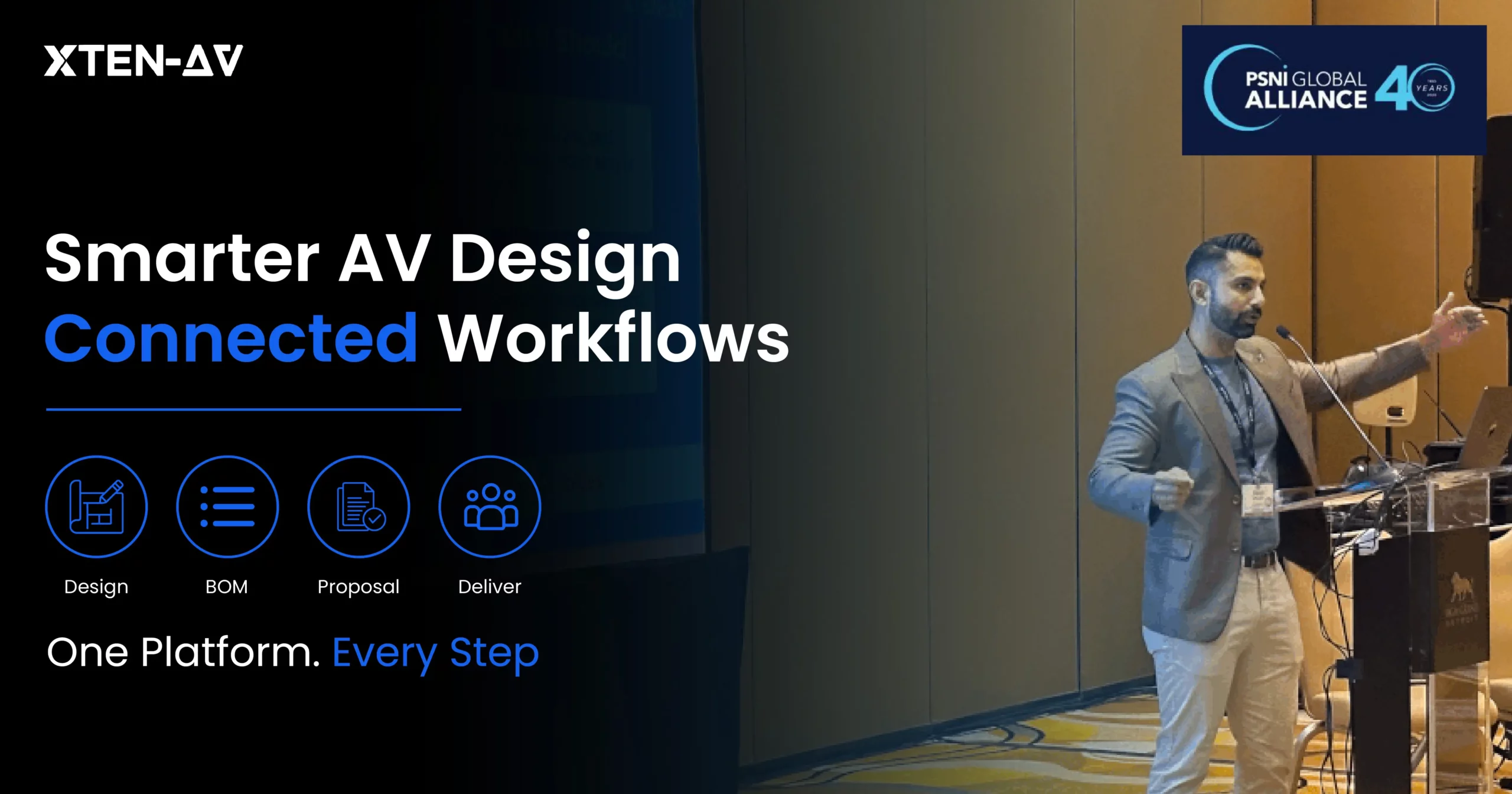
The perspective follows XTEN-AV’s recent participation at PSNI Global Alliance SuperSummit 2026, where AV professionals, designers, and technology leaders came together for design-focused discussions, collaboration, and industry exchange.
According to XTEN-AV, many AV teams still manage design workflows across fragmented tools and disconnected systems. Drawings may live in one platform, BOMs in spreadsheets, proposals in separate documents, project data across emails or shared drives, and approvals in yet another system. As projects change, these disconnected tools across drawings, BOMs, and proposals create avoidable rework, making AV workflow automation more important for modern integrators.
“AV design delays rarely come from one task alone. They usually come from the gaps between tools, when drawings, BOMs, proposals, and project information do not stay aligned,” said Sahil Dhingra, Co-founder & CEO, XTEN-AV.
“The future of AV design is not just about faster drafting; it is about creating a connected workflow from the first design decision to the final project handoff. ”
The issue is especially important for AV integrators managing complex or repeatable projects across enterprise, education, government, hospitality, and multi-site environments. As AV systems become more connected, standardized, and IT-driven, teams need better continuity between system design, documentation, estimation, proposal creation, and project execution.