








What Is an AV Connection Check and Why Does It Matter in Signal Flow Diagrams?

Sahil Dhingra
Published 26 June 2026


There’s a specific kind of frustration that hits on an AV installation when a cable doesn’t match the port it was supposed to land on.
The drawing said one thing. The field says something else. The commissioning window is shrinking. And someone is calling the engineer who signed off on the schematic.
It’s a problem that starts at a desk, and should have been caught there in the first place.
This isn’t hypothetical. It happens on real projects, way more often than most teams want to say, or admit.
An AV connection check reviews every cable, port, and connector pair in a drawing. It confirms that source signals and target signals match. And nothing is missing before the design moves into documentation or installation. In a signal flow diagram, one wrong connection is all it takes. Field confusion, commissioning delays, costly rework. It adds up fast. The earlier you catch it, the cheaper it is to fix.
Key Takeaways
- An AV connection check confirms that every cable, port, signal type and connector pair in a signal flow diagram is correct, and complete, before the installation.
- Signal flow diagrams guide installation, commissioning, documentation and trouble shooting. Errors in the drawing create problems in the field .
- Common AV connection issues include signal mismatches, loose cables, unknown connector pairs, and missing cable IDs.
- Manual AV schematic review gets harder as drawings grow. Especially when they include multiple signal types like HDMI, Dante, AV-over-IP, USB-C, RS-232, GPIO, and fiber.
- A structured AV drawing validation process helps teams catch more errors, improve documentation accuracy, and shorten design review cycles.
- AI Connection Check in X-DRAW scans signal flow diagrams for invalid connections, uncertain connector pairs, and loose cable ends, inside the drawing environment.
- AI-assisted AV design QA surfaces issues faster. But final approval and engineering judgment still stay with the design team.
- Running a connection check before documentation, design review, and installation handoff helps prevent field rework and commissioning delays.
The all-in-one solution for your Audio Visual (AV) Project Design & Documentation needs
Transform your audio-visual experience with XTEN-AV.
No Credit Card required
What is an AV connection check?
An AV connection check is a schematic validation process built into AV schematic drawing software like X-DRAW. It confirms that every connection in a drawing is correct, complete, and compatible.
That means checking the source device and the destination device. Making sure the output port on one side matches the input port on the other. And confirming the signal type is the same at both ends. A fiber output doesn’t end at an analog input. A GPIO control line doesn’t connect to an HDMI display port. Obvious in isolation, easy to miss across a 60-device drawing.
A thorough AV connection validation also checks connector compatibility. Not every connector pair gets documented in every cable schedule. Some pairings are possible but wrong. Others are unknown, which means an engineer’s view is needed before the drawing gets signed off.
Loose connections matter too. A cable where one end is not connected to any device port will still show up in the drawing. It might not appear during commissioning, because it never got wired correctly in the first place.
Why does an AV connection check matter in signal flow diagrams?
Signal flow diagrams don’t stay in the design folder. They travel.
Field installers use them to pull cable and terminate connections. Project engineers use them to generate documentation packages. Commissioning technicians use them to verify what was built matches what was designed. When the drawing has errors, every downstream step inherits those errors.
A wiring diagram with a single signal mismatch doesn’t just cause a bad cable pull. It creates confusion between the design team and the field team. It delays commissioning. It sometimes requires pulling and re-terminating cable that was already installed. Because the drawing told the installer to do it wrong.
AV signal flow diagrams carry more operational weight than most people outside the industry realize. Getting them right in the design phase isn’t just good practice. It’s the difference between a clean handoff and an expensive post-installation conversation.
What problems can happen when AV connections are not checked?
Signal type mismatch
This is the most direct form of invalid AV connection. The source signal and the target signal are simply incompatible.
For example: An HDBaseT output drawn to connect with a fiber input on a switcher that doesn’t support that signal type. Or a balanced audio output mapped to an unbalanced input without any gain stage between. The cable gets pulled. The system doesn’t work. The installer calls the engineer.
Signal mismatch issues are almost always fixable in the design tool in about two minutes. In the field, they can cost hours.
Unknown connector pair
Some connection problems aren’t hard errors, they’re gaps in documentation. The connector pair exists in the drawing, but its compatibility isn’t mapped anywhere in the design’s reference data.
That creates a review problem. An engineer needs to look at it and make a call before the drawing moves forward. If nobody flags it, the drawing ships as-is and the question doesn’t surface until the install.
Loose cable
A loose connection is a cable with one end connected and the other end going nowhere. It sits in the schematic like a real connection.
If it makes it into the documentation, an installer pulls cable to a destination that was never finalized. Now the field team and the design team are coordinating to fix something that should have been caught at a desk.
Missing or confusing cable ID
Cable IDs exist so field teams can trace what’s in the drawing back to what’s in the wall. When a cable ID is missing, duplicated, or unclear, the installer is essentially guessing.
On large installations, cable traceability is what allows teams to troubleshoot quickly. Without accurate cable IDs in the drawing, a field issue that should take 20 minutes to diagnose can take hours.
How does an AV connection check improve drawing accuracy?
The honest answer: by catching things that visual review misses.
When an experienced engineer looks at a dense AV schematic, they’re scanning for the things they’ve seen go wrong before. That’s useful. But it’s also limited. By cognitive load, familiarity with the project, size and complexity of the drawing.
The value comes from consistency. Every cable gets reviewed against the same rules, whether the drawing has 12 devices or 120.
That’s also why it helps junior designers. A newer team member may not recognize a signal mismatch on sight. A structured check gives them the same safety net a senior engineer would provide in a review session. Without the bottleneck of waiting for that review.
For senior engineers, it means fewer design review cycles spent on connection-level errors. They can focus on system logic and design intent rather than hunting for a loose cable on page four.
What should AV teams check in a signal flow diagram?
Before a drawing moves into documentation, it’s worth working through a consistent checklist:
- Are all cable ends connected to a valid device port?
- Do the source and target signal types match on every connection?
- Are all connector pairs confirmed compatible, or flagged for engineer review?
- Are cable IDs present, unique, and traceable?
- Do the device ports shown in the drawing match the actual product specs?
- Is the drawing complete enough to generate accurate AV documentation?
- Does the final drawing reflect the intended system design, not an earlier version?
None of these checks are complicated on their own. The challenge is doing all of them, consistently, on every drawing, before it leaves the design environment.
Why manual AV connection review can be difficult?
An AV schematic for a mid-size commercial project might include 40 to 80 devices and hundreds of cable connections across multiple signal types. HDMI, HDBaseT, Dante, USB-C, AV-over-IP, RS-232, GPIO, fiber, balanced audio. Reviewing all of that manually takes real focus.
The bigger the drawing, the harder it is to hold the full signal map in your head. Revision history makes it worse. When a design goes through multiple rounds of changes, connections that were correct in version three may be broken by version five. Manual AV schematic review relies on the reviewer remembering what changed, which isn’t reliable at scale.
AV systems are also getting harder to review manually. Modern projects often mix HDMI, AV-over-IP, Dante, USB-C, control signals, and fiber inside the same signal flow diagram. That increases the chances of connection-level mistakes slipping through visual review.
There’s also review fatigue. An engineer reviewing a 90-device drawing for the third time in two weeks will not catch every error. That’s not a skill problem. It’s just how attention works.
And in high-volume design shops or firms with growing junior teams. There often isn’t enough senior engineering time to give every drawing the review depth it needs. The senior engineer becomes a bottleneck, or the review becomes shallower than it should be.
How AI Connection Check in X-DRAW helps AV System Designer?
Every problem described above. Signal mismatches. Loose cables in documentation. Connector pairs nobody ever confirmed properly. All of it is fixable in the design phase, if it gets flagged in time.
Inside X-DRAW, our AV design software, AI Connection Check does exactly that. One click from the toolbar runs the check across the entire drawing. No setup. No separate tool. The results populate a panel that categorizes flagged issues into three groups:
Invalid Connections
Invalid Connections are cables where the source and target signal types don’t match. A definitive error that has to be fixed before the drawing moves to the next stage. Take a GPIO control cable drawn to a display input.
Connection flagged: GPIO-1000: source and target signal types do not match.
Those signal types don’t work together. The connection can’t function as drawn.
Each flagged item shows the cable ID and a plain-English reason. The engineer sees exactly what’s wrong and where it exists in the drawing. No cable tracing. No hunting through pages.
Double Check flags
Double Check flags two types of connection issues that need engineer review before the drawing moves forward.
The first is a prediction mismatch. The AI runs a signal flow diagram check on every connection and expects certain source and target signals based on the connection type. When what’s drawn doesn’t match that expectation, it gets flagged. Not as an invalid AV connection, as something worth a second look.
TP-1000: AI predictions did not include these source/target signals.
The second is an unmapped connector pair. The connector compatibility isn’t documented for that pairing. It exists in the drawing, but nobody has confirmed it works. That’s an AV schematic review decision, not an AI decision.
AD-1001: connector compatibility is not mapped for this pairing.
Neither flag is a hard error. Both need engineer judgment before sign-off. That’s the right boundary for AV connection validation. The AI surfaces what it can’t confirm, the engineer decides what to do with it.
Loose Connections
Loose Connections are cables where one end isn’t connected to any device port. These are the easiest to miss and are among the most common causes of incomplete AV documentation. Flagging them before documentation generation means they get fixed before installation.
AD-1000: one end of this cable is not connected.
The real value shows up in workflow. A design that’s been through AI Connection Check can move into documentation, project handoff, or senior engineer review with a known baseline. Connection-level errors have already surfaced. The review can focus on system logic, client requirements, and design intent, not cable tracing.
For teams doing high-volume schematic work, that change in review focus compounds quickly.
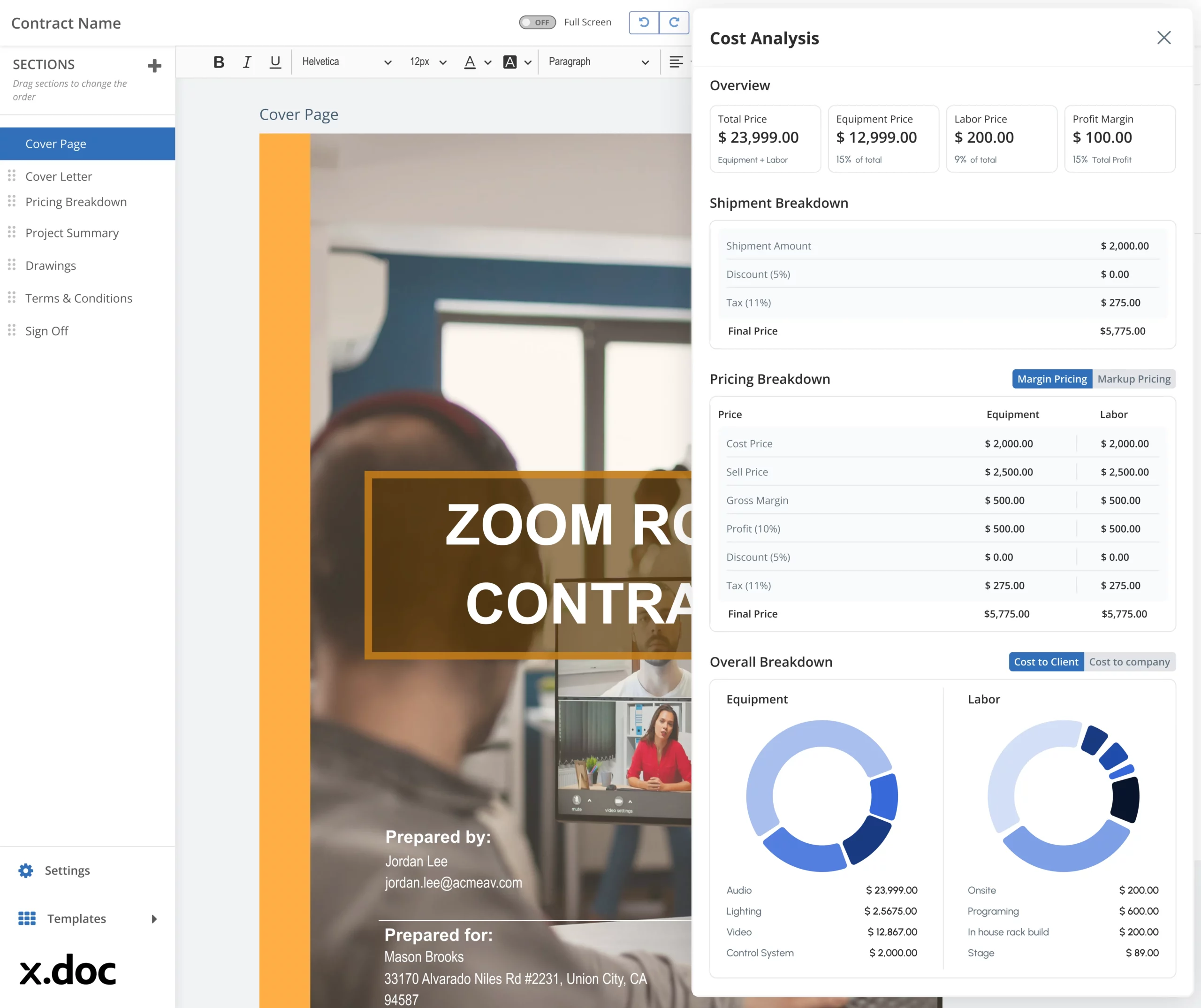
The all-in-one solution for your AV needs
Transform your audio-visual experience with XTEN-AV.
No Credit Card required
Audio Visual System Design Mastery + Winning Proposals = 10x Productivity!
- ✔ Automatic Cable Labeling & Styling
- ✔100+ Free Proposal Templates
- ✔ Upload & Create Floor Plans
- ✔1.5M Products from 5200 Brands
- ✔ AI-powered ‘Search Sense'
- ✔Legally Binding Digital Signatures
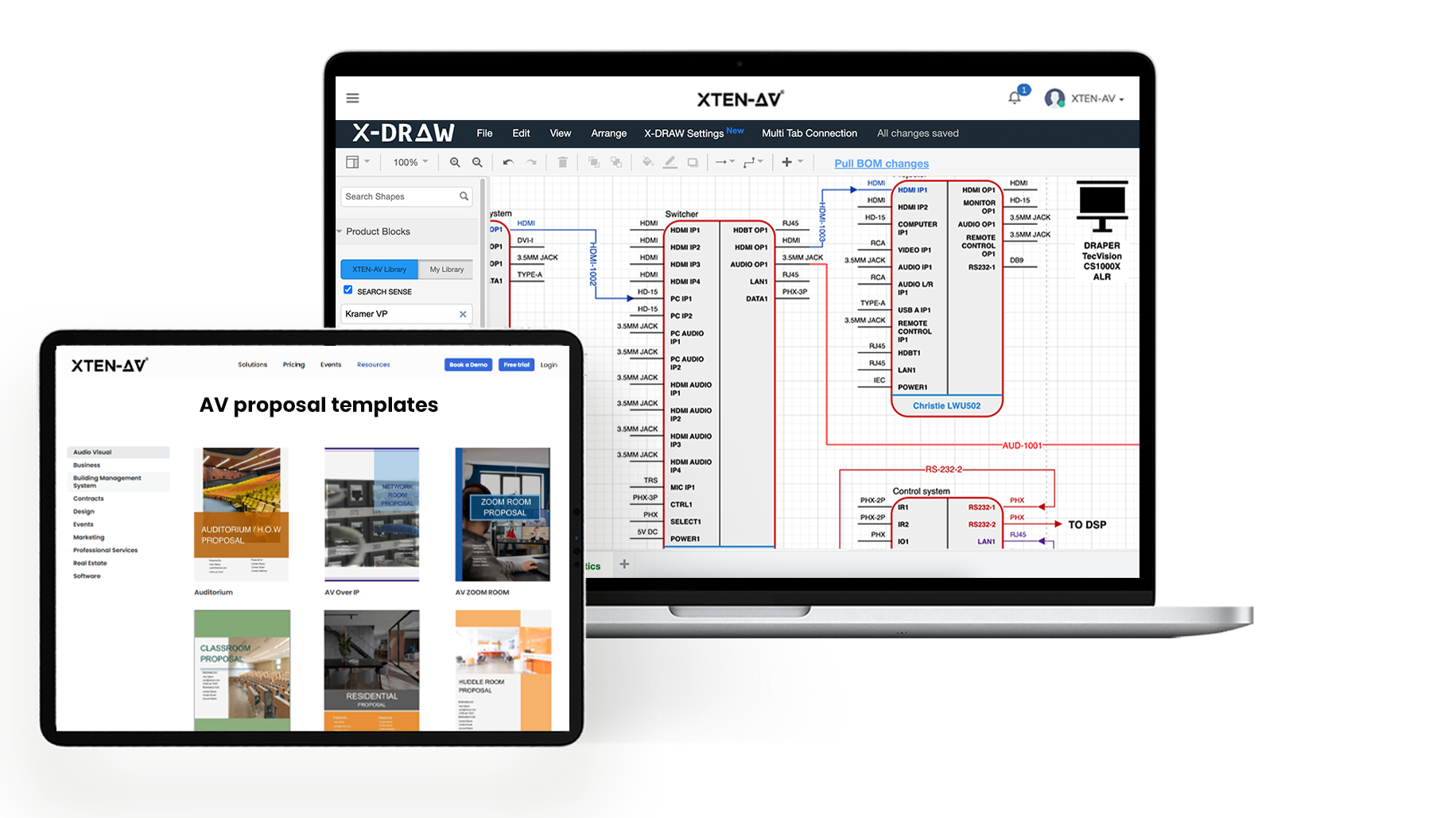
When should AV designers run a connection check?
A connection check is most useful at transition points, moments in the workflow where the drawing is about to move somewhere new.
Run it after completing the signal flow diagram, before anything gets exported or shared. Run it again after any significant revision, because changes introduce new errors. Run it before the drawing goes to senior engineer review, so the review session isn’t spent on mechanical connection errors. And run it before generating documentation or finalizing the installation handoff package.
The goal is to make sure connection-level issues get resolved in the design stage, not discovered in installation.
Who benefits most from AV connection checks?
- AV system designers catch their own mistakes before they become someone else’s problem. That’s the whole point of running a check before the drawing moves anywhere.
- Signal flow engineers spend less time re-reading cable paths and more time on the logic that actually needs their attention. A validated schematic ships with more confidence behind it.
- Project engineers get cleaner documentation. A validated drawing produces a more accurate install package. Fewer questions from the field. Fewer back-and-forth calls mid-installation.
- Junior designers get a safety net they didn’t have to build themselves. Signal mismatches and loose cable errors get flagged before the drawing reaches a senior engineer. Less rework. Over time that also builds better instincts.
- Design managers get consistency which is hard to build manually. When every designer runs the same check before submitting, review quality stops depending on who reviewed it. In X-DRAW that’s one click. Easy enough to become a team standard.
- Field teams get drawings they can trust. Fewer questions during cable pull. Fewer surprises at commissioning. Less time troubleshooting a schematic that doesn’t match what was actually supposed to be installed.
Conclusion
The gap between a good AV design and a clean installation is almost always about information accuracy. The drawing is the source of truth for everyone downstream. When it’s wrong, the whole project feels that error in some form, usually at the worst possible moment.
A consistent AV connection check process doesn’t eliminate all design errors. But it closes the most common and most preventable gaps before they travel downstream. Signal mismatches, loose cables, unknown connector pairs, these are fixable in minutes at the design stage. In the field, they’re expensive.
Using AI Connection Check in X-DRAW, AV teams can scan signal flow diagrams for invalid connections, unknown connector pairs, and loose cables, before any of it reaches the field.
Fewer surprises at installation. Cleaner documentation. Design reviews that focus on real engineering decisions instead of cable tracing.
FAQ's
It’s the process of reviewing every cable, port, signal type, and that connector pair in a schematic. The idea is to make sure all the connections are correct, complete, and work together.
Signal flow diagrams guide how AV systems get installed, wired, tested, and documented. Errors in a drawing don’t stay in the drawing. They move into documentation, into cable schedules, and onto the job site. Catching them at the design stage costs a fraction of what it costs to fix them during commissioning, or after cable has already been pulled.
Signal type mismatches between source and target devices. Loose cable ends with no valid port connection. Unknown or unconfirmed connector pairs. Incorrect device port assignments. Missing or unclear cable IDs.
It confirms that each connection follows the intended signal path. From source device to destination device. That makes the drawing more accurate for installation, documentation, and commissioning.
Yes. AI can scan a drawing and flag invalid signal types, loose cable ends, and connector pairs that need review, faster than a manual pass. Design teams get a first layer of AV schematic review done before the drawing reaches a senior engineer or goes into documentation.
No. AI Connection Check flags issues and surface uncertainty. Engineers still review, confirm, and resolve everything that gets flagged. The Double Check category in X-DRAW is built to support engineer judgment, not skip it. The AI shows what it doesn’t know. The engineer decides what happens next.
Explore more by topic
AV Design Mastery + Winning Proposals = 10x Productivity!
- Automatic Cable Labeling & Styling
- 100+ Free Proposal Templates
- Upload & Create Floor Plans
- 1.5M Products from 5200 Brands
- AI-powered ‘Search Sense'
- Legally Binding Digital Signatures
No Credit Card Required
Related Blogs
-

- Posted by Sahil Dhingra

Audio Visual AV Cables Guide: Types, Connectors, Uses and Wiring Diagrams for...
-
- Posted by Sahil Dhingra
Audio Visual Courtroom Audio Visual (AV) Systems: A Complete Guide for Courts...

-
- Posted by Sahil Dhingra
Audio Visual 10 Best draw.io Alternatives for AV Professionals Sahil Dhingra Published...