









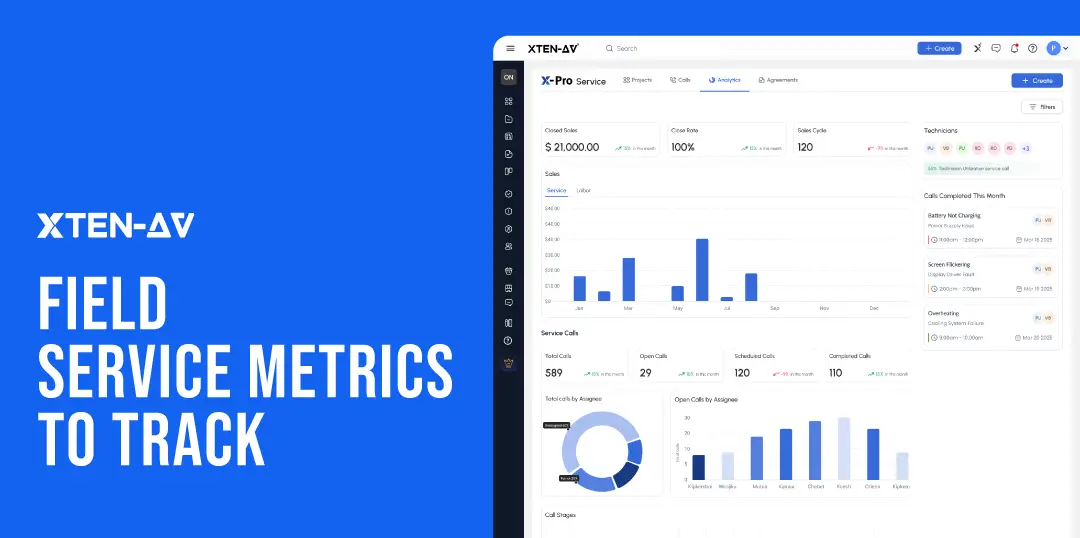
Field Service does not end when an audio-visual system is installed. For AV integrators, the real challenge starts after the handoff. That’s when clients start requesting service calls, maintenance visits, troubleshooting support, contract renewals and system upgrades.
For AV integrators, each service call includes key details. Some of them are response time, technician performance, system reliability, agreement profitability and client satisfaction.
For AV integration firms, field service metrics are key. They help track service-call visibility, technician utilization, response speed and billing accuracy. When tracked properly, these metrics help service managers and business owners see site activities clearly. They also show where the service process requires improvement.
The need for better field service tracking is reflected in recent industry research. According to ServiceTrade’s 2026 survey of more than 800 service technicians, 45% identified miscommunication between field and office teams as a major productivity barrier, while 44% pointed to inefficient scheduling. AV integrators need to track service-call, scheduling and technician-utilization metrics that can help identify any coordination gaps before they negatively impact response times and client support.
For AV businesses, these metrics are not just operational numbers. They specifically show how well technicians are doing their work, how quickly clients are being supported.
AV project management software can also improve field service visibility by connecting technician activity and post-installation support with the original project records. Hence, AV companies can track service performance, prepare teams for site visits and identify recurring issues more accurately.
Key Takeaways
- Field service metrics help AV integration firms measure post-installation service performance, including response speed, technician efficiency, billing accuracy and client support quality.
- AV service requires project data in one connected platform because technicians often need access to drawings, BOMs, equipment details, service history and agreement information before resolving any issue.
- When defining metrics, it’s crucial to fully understand business objectives and how the field service team contributes to these goals.
- Service efficiency, customer satisfaction and business performance are the three main KPI categories that are crucial to consider for field service operations.
- XTEN-AV X-PRO Service helps AV integrators manage service calls, agreements, analytics and field updates within the same platform used for AV design, proposals and project delivery.
This guide provides a broad collection of field service management metrics and key performance indicators (KPIs). Learn which measurements work best for your business, how to monitor them and what actions to take to improve performance.
What are Field Service Metrics?
Field service metrics are performance measurements that help service managers track how well field operations are running. These metrics show how quickly service requests are handled, how efficiently technicians are used, how often issues are resolved on the first visit and how much revenue comes from service work.
AV systems are often complex. A single support request may involve displays, DSPs, control systems, amplifiers, cameras, video conferencing equipment, racks, cables and firmware.
Field-service management challenges AV integrators face includes a long list. They often start when service calls, technician schedules, labor hours, invoices, agreements and original project documentation sit in separate places. Without connected data, service managers struggle to track response speed, technician workload, service profitability and repetitive issues.
The right field metrics help AV integrators understand:
- Service request response speed
- First-visit issue resolution
- Clients with the highest service load
- Service agreement profitability
- Billable technician time
- Repeated issues by room, system or equipment type
- Service revenue growth
Service Efficiency KPIs:
These KPIs show how well technicians, schedules and service calls are being managed. Service efficiency KPIs are usually time-related, helping AV service managers understand response speed, job completion time, repeat visits, technician utilization and service backlog.
For example, if service calls for video conferencing systems take longer than other requests, the issue may be of missing documentation, improper technician training needs, equipment complexity or recurring configuration problems. These KPIs can be used to identify where time is being lost and where field support can improve. This may also point out how minimizing time spent at jobs in the field improves service efficiency or how resolving scheduling issues can improve response rates.
Customer Satisfaction KPIs:
Customer satisfaction KPIs show how satisfied clients are before, during and after service. These may include response time, resolution time, repeat service calls, customer feedback and client retention.
Customer satisfaction is crucial. Many AV systems serve classrooms, boardrooms, auditoriums, command centers and meeting spaces. When these systems do not perform properly, client operations may be affected to a great extent. Tracking customer-focused field-service KPIs helps service managers understand whether clients are receiving timely and reliable support.
Business Performance KPIs:
Business performance KPIs pay attention to revenue, cost and profitability. The most common KPIs used to measure this includes agreement profitability, service revenue, service margin, billable technician hours, invoice cycle time and renewal opportunities.
For AV businesses, this category is important because post-installation service can become a predictable revenue stream when it is measured properly. Business performance KPIs allow business owners and service leaders to determine if their service agreements are profitable, if technicians are using their time efficiently and if service work provides a foundation for sustainable growth.
Top Field Service Metric Audio Visual (AV) System Integrators Should Track
The listed below field service metrics help AV system integrators identify bottlenecks and optimize business profitability across their field operations.
Service Response Time
Service response time measures how long it takes your team to respond after a client raises a service request. This is one of the most crucial service metrics for AV spaces like classroom, conference rooms, boardrooms, and auditoriums where downtime can affect meetings, events or classes.
Response time can be tracked from:
- Ticket creation to first response
- Ticket creation to technician assignment
- Ticket creation to scheduled visit
- Ticket creation to first action taken
When tracking these stages, AV service teams can begin issues, whether in the initial response, technician assignment or scheduling.
First-Time Fix Rate
The percentage of service calls resolved on the first visit without needing follow-up trips. For AV integrators, first-time fix rate depends on project context. Technicians need access to drawings, BOMs, rack details, cable information, device models, serial numbers and previous service history before arriving on site. When this information is connected, technicians can prepare better and resolve more issues effectively on the first visit.
Average Resolution Time
Average resolution time tracks how long it takes to fully resolve a service issue. A simple cable replacement may be resolved quickly. A video conferencing system issue may take longer than other requests, the service manager may need better documentation, technician training or preventive maintenance steps for those systems.
This metric should be reviewed by issue type, client type and system type. This helps identify which problems take the most time and which clients or environments require more support.
Parts and Asset Tracking Accuracy
It measures whether installed equipment, replacement parts and service records are correctly documented. This is especially important because technicians may need to confirm the display model, DSP, control processor, replacement part availability, warranty status and firmware version to name a few.
If asset records are inaccurate, service calls take longer. Technicians may arrive without the right parts or spend time identifying equipment on the job site while confirming details that should already be available.
Mean Time to Complete
Mean time to complete metric refers to the entire amount of time that passes from receiving a service request call to when the job is completed. This metric can impact customer satisfaction and this is mainly when calls are taking longer or require follow-up appointments.
Technician Billable Hours
Tracking the billable hours for each technician is considered as the most valuable AV service metric as this plays a vital role in monitoring the field service team’s productivity. It refers to the percentage of the day that each technician spends working on calls, as compared to time traveling, or coming back to collect missing parts.
If the technician billable hours are lower, you’re missing out on potential profits. Technicians are not generating as much revenue as they could be because non-billable task is taking a lot of their time.
Service Revenue
Service revenue measures the revenue generated from post-installation support. This includes service calls, maintenance visits, support agreements, system upgrades and replacement parts. Technicians work directly with clients on site and thus, they may know what additional service needs or upgrading is required. With this metric, AV firms understand how post-installation support leads to recurring revenue.
For example, while resolving a recurring audio issue in a conference room, a technician may notice that the microphone system is outdated or the display needs replacement or that there is a need for a preventive maintenance plan. When these service findings are documented properly, these can be converted into upgrade recommendation, replacement work or new service agreements.
Technician Utilization
It shows how much technician time is spent on productive service work. With this metric, service managers can understand whether technicians are being used efficiently. It can also show whether the team is overbooked or underused. If technicians spend too much time looking for project details, waiting for approvals or revisiting the same issue, the profitability can drop quickly. When this metric is tracked, service managers can understand how to improve field-service technician utilization. Don’t forget that technician utilization is also closely connected to resource allocation in AV project management, because teams need to understand technician availability, workload and active support demand before assigning new tasks.
Service Agreement Close Rate
Service agreements close rate measures how many proposed service agreements are accepted by clients. This is a significant recurring revenue metric for AV integrators, but only if they are priced and managed correctly.
Track this AV service metric by proposal sent, viewed, accepted, client type, contract value, agreement package and many more. An agreement may look profitable at the contract level but become less profitable if the client requires frequent service visits or repeated support. For AV integration firms, agreement profitability shows if service contracts are generating steady revenue. It also shows if technician time, parts, travel and support costs are managed well.
Service agreements also require clear terms, coverage details, response expectations, renewal conditions and billing rules. AV firms building a recurring service model can also review how to write an AV service contract before defining after-sales agreements.
Tracking AV field service metrics becomes easier when service data is connected to the original AV project. This is where best field-service management software for AV integrators becomes important. This is because it connects service calls, technician updates, agreements, and project documentation in one place. When these project records are managed across fragmented tools, it becomes harder for service managers to understand response times, technician workload, recurring system issues and service profitability. In this regard, XTEN-AV brings project design and service data together through X-PRO Service.
How XTEN-AV X-PRO Service Helps AV Integrators Track Audio Visual Field Service Performance?
XTEN-AV X-PRO Service, an Audio visual (AV) field service management software that brings after-sales service management into the same unified platform used for AV design, proposals and project delivery. This way AV system integration firms can manage the complete process from the first design to the last service call without separating service data from the original project details.
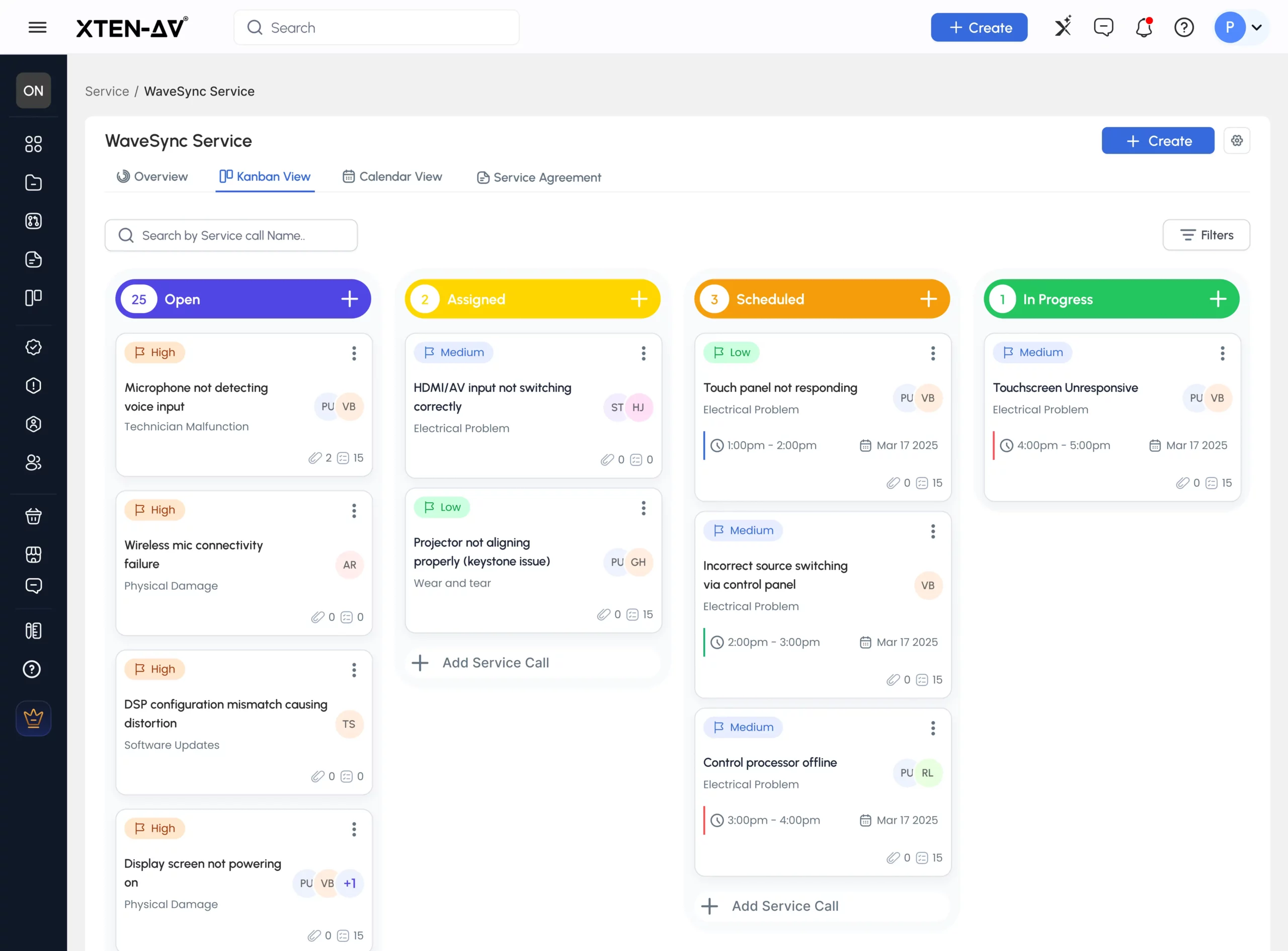
Service calls can be organized through a visual Kanban board with stages such as Open, Assigned, Scheduled, In Progress and Completed. This enables service managers a clearer visibility of open calls, scheduled tasks and completed requests.
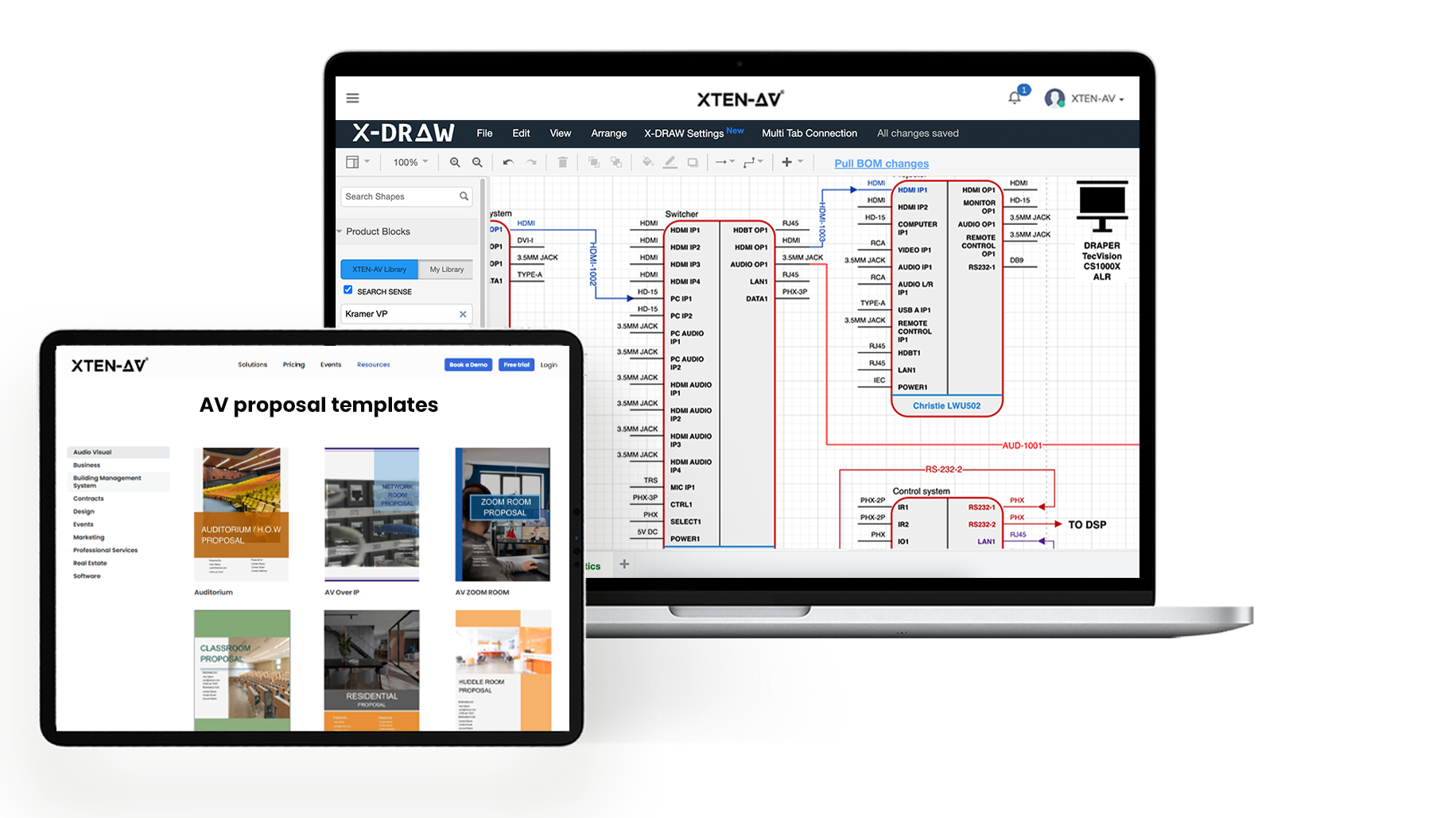
The service agreements feature helps AV firms create and manage after-sales contracts using the same x.doc editor used for proposals. Agreements can move from Draft, Sent, Viewed and Accepted. This helps teams track service agreement progress and recurring revenue opportunities.
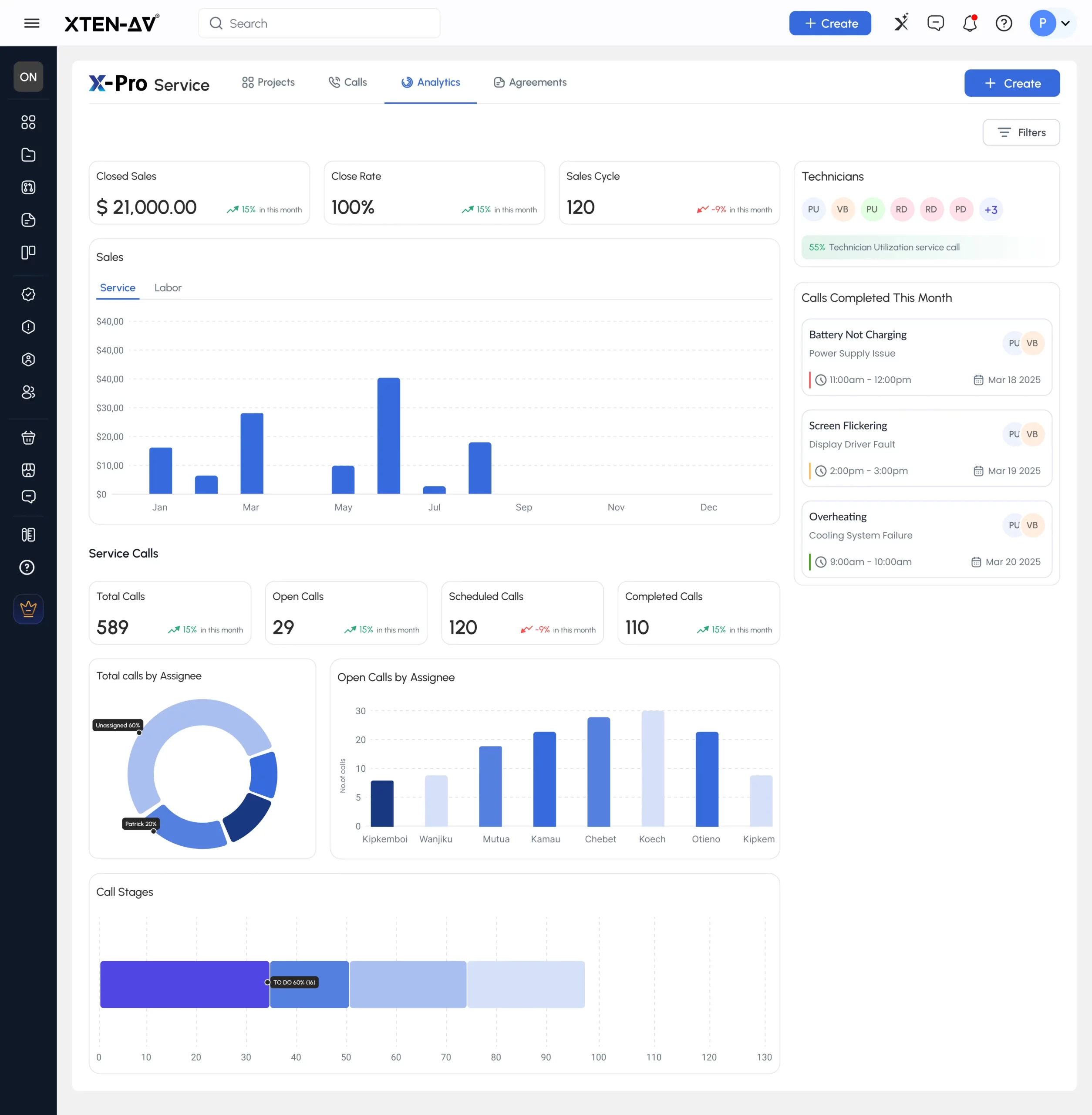
Additionally, with Service Analytics, there is no need to build manual reports from different systems, AV firms can review metrics such as closed sales, close rate, sales cycle, technician utilization, service revenue and call activity from one dashboard.
On the other hand, it is important to note that for field technicians, mobile access is of utmost importance. XTEN-AV mobile app gives technicians a dedicated Field View, allowing them to check assigned service calls, site information, reported issues, client contact details and scheduled time before arriving at the job site. During the visit, they can clock in, update call status, document actions taken, add images and reschedule calls when needed. Each update syncs with the platform. As a result, service managers can get real-time visibility into field activity without waiting for manual reports at the end of the day.
Audio Visual System Design Mastery + Winning Proposals = 10x Productivity!
- ✔ Automatic Cable Labeling & Styling
- ✔ 100+ Free Proposal Templates
- ✔ Upload & Create Floor Plans
- ✔ 1.5M+ Products from 5200 Brands
- ✔ AI-powered 'Search Sense'
- ✔ Legally Binding Digital Signatures
Conclusion
With field service metrics, AV integrators can understand what happens after installation. They can check how quickly service requests are handled, how efficiently technicians are used and how quickly issues are resolved.
AV service depends on connected project details. A service team cannot support an AV system properly if drawings, BOMs, installation, service agreements and support history are scattered across different tools or files. When AV firms track the right field service metrics, they should know that response time will be improved, reduced repetitive visits and better client support.
However, XTEN-AV’s X-PRO Service helps AV integrators bring service calls, agreements, support history and project context into one connected platform, making post-installation support easier to manage.
Learn how XTEN-AV can add efficiency to your processes. Request a live demo today.
FAQ’s
Field service metrics indicate how well service managers track service-call activity, response time, technician utilization, first-time-fix rate, service revenue, billing accuracy, profitability and customer satisfaction.
AV integration firms need to track average response time, mean time to complete, first-time fix rate, technician utilization, technician billable hours, service revenue, agreement close rate and contract renewal rate.
Field service metrics are important because AV system designing is complex and usually needs ongoing support after installation. These metrics help AV firms measure service speed, technician performance, client support quality and service profitability in a streamlined manner.
X-PRO Service helps AV integrators manage service calls, agreements and support history inside the XTEN-AV platform. It allows service managers and technicians to access more details about a particular project after it is completed, thereby assisting with ongoing service delivery.

Explore more by topic
Related Blogs
-

- Posted by Sahil Dhingra

Audio Visual Top Purchase Order Management Software for AV Project Managers to...
-
- Posted by Sahil Dhingra
Audio Visual How to Streamline Purchase Order Management for AV Projects Sahil...
-
- Posted by Sahil Dhingra
Audio Visual How to Accurately Estimate Fire Alarm System Cost Sahil Dhingra...