




AV Standardization Guide for Scalable Audio Visual Projects

AV Standardization Guide for Scalable Audio Visual Projects

Author Image

Sahil Dhingra

Published 01 May 2026
AV standardization for scalable audio visual projects with AVIXA-aligned workflows and documentation
Table Of Content

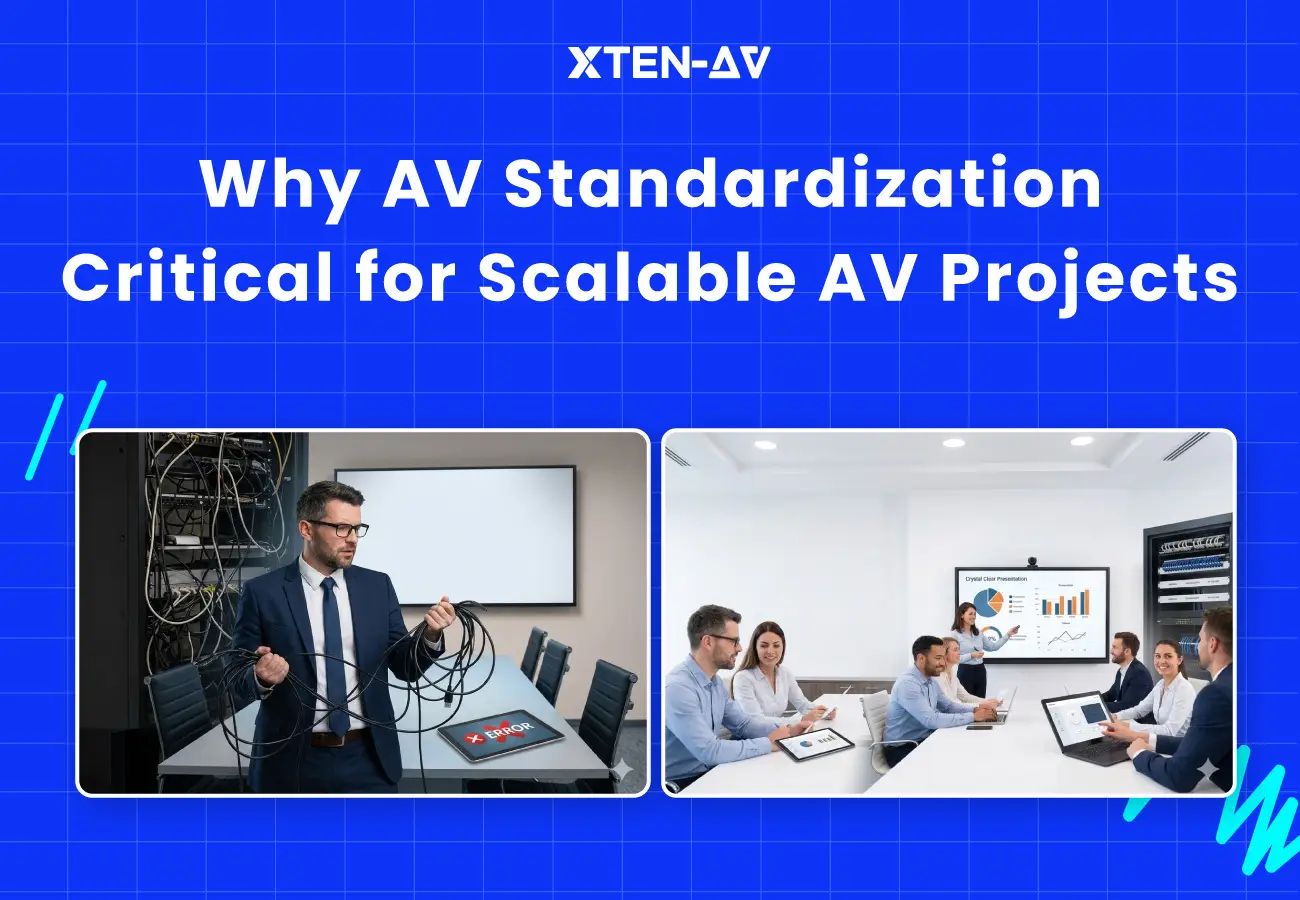
Just imagine a scenario where you walk into a beautifully designed conference room, sleek interiors, high-end displays, and perfectly installed equipment. But the moment the meeting begins, things fall apart. The display won’t sync, the microphone drops out, and no one can figure out the control interface

This scenario happens in businesses across the globe every single day and while it may seem like a failure of technology, the real issue is a failure of design. Behind most AV breakdowns are reasons like inconsistent signal flow logic, control system misconfigurations or improper documentation. The equipment exists, the tools are there, but no one planned how they should work together as a cohesive experience.

This is where AVIXA approved AV standardization comes in, not just as a technical solution, but as a design approach that ensures systems, spaces, and users are all aligned.

Key Takeaways

AV system fails because of inconsistency in design, unclear documentation and no standardized workflows.

AV standardization follows consistency in designing, documentation and execution across projects.

Inconsistent AV systems lead to hidden costs like inefficiency, higher support cost and scalability issues.

Standardized AV workflows improve design quality, minimize errors, and enhance collaboration across teams.

Proper documentation, including signal flow diagrams, BOM, and cable labelling are crucial for seamless execution.

Platforms like XTEN-AV enable end-to-end standardization with AVIXA guidelines through templates, automation, and integrated workflows.

The all-in-one solution for your Audio Visual (AV) Project Design & Documentation needs

Transform your audio-visual experience with XTEN-AV.

No Credit Card required

What Is Audio Visual (AV) Standardization?

AV standardization is the structured approach that brings consistency into how audiovisual systems are designed, documented and delivered across multiple projects. For AV designers, this means following set rules when making signal flow diagrams, system schematics, rack elevation drawings, and layouts. This way, every design follows the same logic and structure, no matter how big or complicated the project is. For AV consultants, it makes sure that design goals, specifications, and documentation are all the same and easy to evaluate by different people and at different stages of the project. For AV integrators, it makes things clearer during execution by making sure that all AV documentation standards, such as the Bill of Materials (BOM), cable labelling, and system drawings, are the same and ready to be used.

Moreover, AV standardization removes any kind of interpretation gaps between design and execution. There is no exaggeration in saying that when every project follows the same well-defined format, it simplifies to translate design intent into real world installation. This is crucial especially in multi-location AV deployment because when consistency is there then there will be no confusion or rework.

Thus, audio visual standardization simply creates a predictable and disciplined way of working, allowing AV professionals to AVIXA standards design, coordinate and deliver systems with clarity and accuracy.

Role of X-Draw in AV Standardization

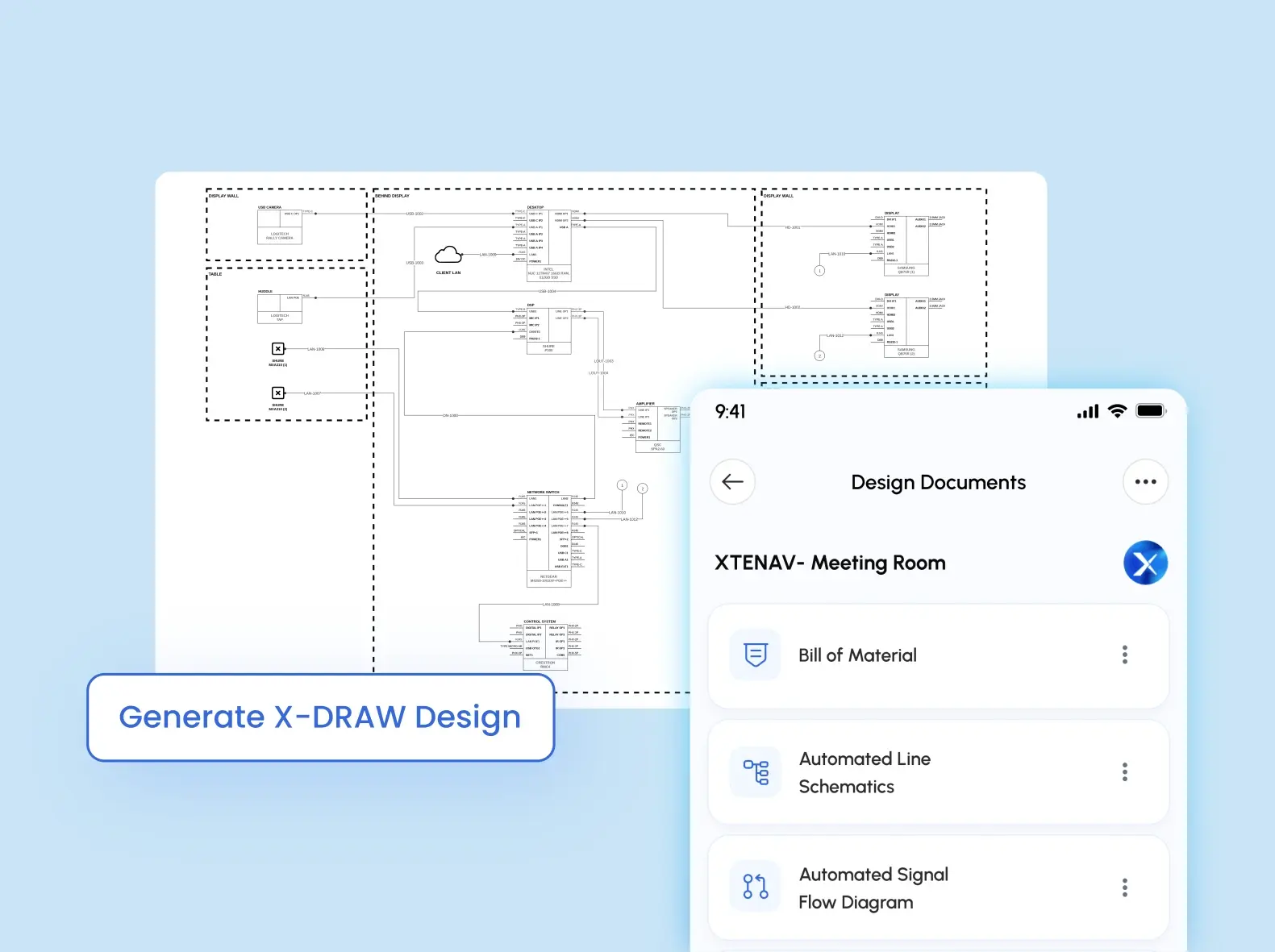
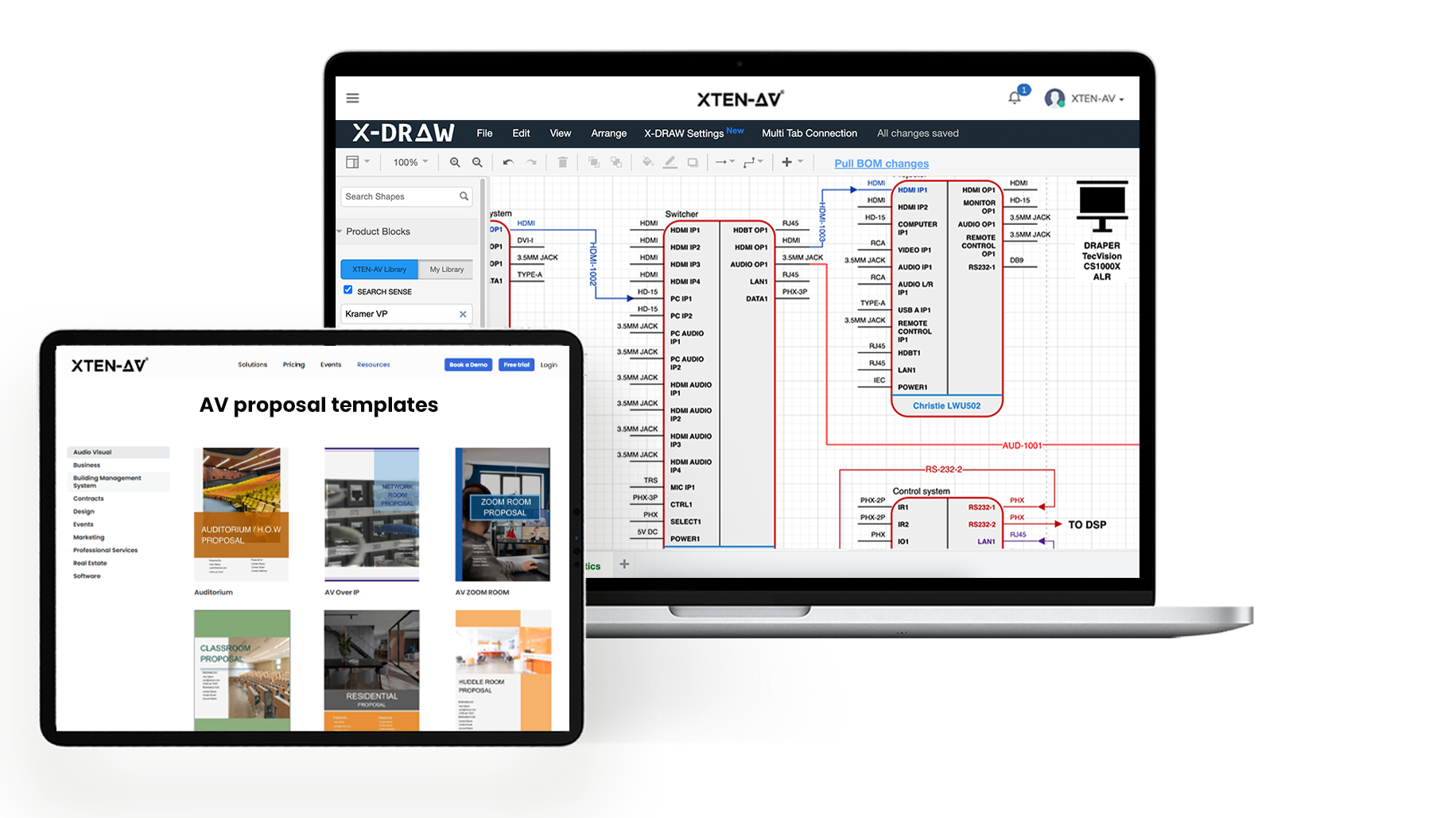
A major enabler of design consistency is X-Draw. It allows AV designers to make AVIXA standardized signal flow diagrams, rack layouts and system schematics by using structured templates and design logic that are reusable. Designers can keep things consistent across different projects while committing fewer mistakes and improving speed. X-Draw makes sure that all AV systems look and act like they belong to the same design language.

The Hidden Costs of Inconsistent Audiovisual (AV) Standardization

Whether it’s a theater, corporate boardroom, or an interactive museum exhibit, AV systems play a vital role in communication, productivity, and collaboration. However, inconsistent audio-visual standardization often paves the way for a wide range of hidden costs that goes beyond initial equipment expenses.

Reduced Operational Efficiency: Different AV systems across rooms require employees to spend more time learning and fixing systems, leading to lost productivity.

Limited AV System Scalability: It’s difficult to integrate new technologies or build on existing infrastructure when systems are not standardized because it is harder for them to work seamlessly.

Higher support costs: Organizations may require additional staff or external technicians due to the lack of AIVXA AV standardization in systems.

Reasons to Standardize Your Audio visual AV Project Workflow

Standardizing AV project workflow is a prerequisite for better efficiency, quality and improved profitability. A standards-aligned process helps AV teams work with greater clarity from concept through commissioning. When workflows follow a repeatable structure influenced by AVIXA best practices, ANSI/AVIXA-aligned documentation logic, and consistent design validation, projects become easier to scale, review, install, and support. Listed below are some reasons why it is worth doing:

Uniform Design Quality: Standardizing AV project workflow ensures that every project follows the same design stages such as requirement analysis, concept development, detailing, and validation review. This creates more consistent outputs across room types and helps teams maintain a common AV design standard.

Minimized Errors: A standardized AV system design process introduces checkpoints for concept validation, signal flow verification, equipment coordination, and documentation accuracy. Deliverables such as signal flow diagrams, rack elevation drawings, Bill of Materials (BOM), and cable schedules become easier to review against project intent. This reduces interpretation gaps early in the design phase and supports a more AVIXA-aligned quality control approach, resulting in less rework during installation and commissioning.

Enhanced Collaboration: There is no denying the fact that a well-defined AV system design process aligns AV designers, AV integrators, AV consultants and stakeholders by providing a common structure and documentation approach.

Supports AV System Scalability: AV standardization helps in designing the systems with future expansion in mind, which supports AV system scalability through provisions like modular components, flexible architecture and spare capacity.

Ensures Well-Defined Documentation: Audio visual standardization defines clear deliverables such as signal flow diagram, rack layout, Bill of Materials (BOM) and AV documentation, ensuring smooth transition to execution.

Benefits of Standardization AV System Design Process

Standardizing AV systems offers a noticeable efficiency and clarity to how effectively projects are designed from one stage to another and delivered. Once a structured AV project workflow is in place, AV designers need not to repeatedly redefine formats or approaches. This paves the way for a faster design cycle and allows designers to focus on ensuring that each design is well-thought out.

When a standardized approach is considered, AV project workflow looks structured, making drawings and system representations easier to understand and work with. Additionally, structured project workflow reinforces AV documentation standards by ensuring that every project follows AVIXA best practices. Another essential benefit is that it aligns organically with audio visual room design standards, making sure that different spaces are designed with the same principles for functionality, performance and usability. Hence, it can be said that user experience is improved to a greater extent.

Adopting a tool like X Draw can streamline the designing process by helping AV designers maintain consistency in signal flow diagrams, system schematics, rack elevation drawings, cable labeling standards, and floor plan outputs. The result is a more repeatable AV design workflow that reduces variation, improves clarity, and supports scalable project delivery.

How XTEN-AV Enables Audio visual (AV) Standardization

AV standardization doesn’t just require defined processes, in fact it needs a platform that can bring design, documentation, and workflow together in a consistent and structured way. This is where XTEN-AV steps in as it plays a crucial role in allowing the team to implement and maintain AV standardization across the entire system design process.

Consistent Design Outputs:

  • Streamlines creation of standardized signal flow diagrams, system schematics, rack elevations, cable labeling records, and floor plan layouts.
  • Maintains same design logic and structure across projects.
  • Supports a more AVIXA-aligned documentation workflow with better clarity and consistency.

Structured BOM Architecture:

  • Simplified and structured generation of key deliverables like Bill of Material (BOM) and project documentation.
  • Supports cost accuracy and documentation completeness across project stages.

Standardized Design Templates:

  • Enables teams to reuse of floor plan templates, rack layouts, signal flow structures across multiple projects
  • Less design time while maintaining consistency  

Proposal & Scope Standardization:

Reduces manual work while improving consistency across proposals and scope documents. 

Keeps scope, pricing, and technical details aligned with actual design data.

Scalable Workflow Automation:

  • Supports AV system scalability across multiple projects, teams, and locations. 
  • Automates drawing and documentation workflows to reduce repetitive effort. 
  • Connects design, BOM, scope, and documentation into one standardized workflow. 

Better Team Collaboration:

  • Ensures all stakeholders work with standardized formats and documentation.
  • Improves coordination between design, sales, and execution teams.
The all-in-one solution for your AV needs

Transform your audio-visual experience with XTEN-AV.

No Credit Card required

Audio Visual System Design Mastery + Winning Proposals = 10x Productivity!

  • Automatic Cable Labeling & Styling
  • 100+ Free Proposal Templates
  • Upload & Create Floor Plans
  • 1.5M Products from 5200 Brands
  • AI-powered ‘Search Sense'
  • Legally Binding Digital Signatures
Laptop Mockup

Conclusion

AV standardization is not just a technical best practice; it is a strategic approach to designing systems that actually work the way they are intended to. When you bring consistency to design, documentation and execution, there will be no confusion, less errors, troubleshooting becomes much simpler and you can make sure that every AV deployment delivers a consistent user experience.

Whether you’re managing a single space or scaling across multiple locations, a standardized workflow supported by the right tools transforms AV from a source of frustration into a reliable, efficient, and future-ready system. Scalable AV becomes more than just a technical solution; it becomes a business advantage.

Ready to eliminate AV chaos and deliver systems that work seamlessly every time? Start standardizing your AV workflows with XTEN-AV and experience faster deployments, fewer errors, and consistent results across every project.

FAQ's

AV standardization is the creation of consistent audio-visual system designs, processes, and documentation across multiple projects and locations. AV integrators can develop well structured room templates that include predefined rack layouts, cable labelling standards and signal flow design. For a similar project, a pre-defined template can be used for either conference room, classroom or home theatre. In simple words, standardization uses repeatable design templates, approved equipment lists, structured documentation which reduces complexity and streamlines workflow.

AV standardization is crucial for multi-location business because it ensures consistent, seamless and reliable experience across all projects that build trust among users and stakeholders. It is important to note that without standardization, organizations often face fragmented systems that lead to inefficiencies, complexities and cost. When different sites use different systems or documentation methods, even minor changes can lead to a lot of errors and rework across projects. However, standardization solves this by adopting a unified approach to both design and execution. With documentation like Bill of Material (BOM), signal flow diagrams, cable labelling standards and rack elevation drawing, every project follows the same structure and proven AV setups can be replicated without starting from scratch.

AV cable labeling standards are a pre-defined set of guidelines which helps in identifying and organizing cables with an audiovisual system. All the cables are tagged with key information, including source and destination, signal type as well as unique identifier. When you follow proper cable labeling standards, troubleshooting becomes faster, installation errors are reduced and future upgrades or expansion becomes easier. Instead of doing any guesswork, technicians can understand how the system is wired which saves time and avoid costly mistakes.

With AV standardization, businesses can use proven designs for multiple projects which directly speeds up the completion of work. It is said that when teams are working with familiar setups, deployments are quick and less prone to errors. This reduces rework, delays and unexpected project cost. In addition to this, AV standardization powers cost savings by improving efficiency, reducing complexity, and ensuring predictable outcomes across every project.

With AV system design software, users can create a single AV project workflow for design, documentation and installation. Teams can reuse design templates, and project frameworks so as to make sure every project follows the same structure. This way they can reduce inconsistencies and eliminate the need to start from the beginning for each new deployment. With AV software, as design evolves documents are updated, ensuring no errors and consistent outputs across multiple projects.

Explore more by topic

AV Design Mastery + Winning Proposals = 10x Productivity!

No Credit Card Required

Related Blogs
AV standardization for scalable audio visual projects with AVIXA-aligned workflows and documentation
  • Sahil Dhingra
  • Posted by Sahil Dhingra
May 1, 2026

Audio Visual AV Standardization Guide for Scalable Audio Visual Projects Sahil Dhingra...

RFQ vs RFP in AV projects showing procurement, bid response, and proposal workflow for integrators
  • Sahil Dhingra
  • Posted by Sahil Dhingra
April 29, 2026

Audio Visual RFQ vs RFP in AV Projects: Procurement Guide for Integrators...

Step-by-step AV project cost estimation process covering scope, labor, procurement, and contingency
  • Sahil Dhingra
  • Posted by Sahil Dhingra
April 24, 2026

Audio Visual How to Estimate AV Project Costs Accurately Sahil Dhingra Published...

Sahil Dhingra
Sahil Dhingra
A software developer, business analyst & people’s manager, Sahil Dhingra has over 10 years of experience working for tech giants such as Apple, HP, and Cisco. With his deep understanding of the Software Development Life Cycle, Sahil strives to expand the horizon for SaaS-based products for AV professionals while also implementing the latest technologies such as AI, ML, VR, and Blockchain.

This website stores cookies on your computer. Cookie Policy