









Accurately estimating the cost of a fire alarm system involves more than counting equipment and adding installation charges. A realistic bid must account for system integration, engineering overhead, infrastructure pathways and regulatory hidden variables. Even a small oversight during estimation can lead to an inaccurate fire alarm system cost estimate.
The challenge becomes even more complex as project requirements increase. Offices, multi-story buildings, warehouses or industrial facilities may have different equipment, labor, cable routing and installation needs. Relying on fire alarm system cost per square foot can therefore result in estimates that fail to provide the actual scope of work.
When project requirements are underestimated, contractors may face additional labor, material and installation expenses that can erode profit margins, while overestimating can make bids less competitive. For building owners, inaccurate estimates can result in budget overruns.
A more reliable way is to prepare the estimate around the actual project scope. Estimators should review system requirements, identify equipment and installation needs, calculate labor and other project costs and validate the estimate before preparing the final fire alarm proposal.
Key Takeaways
- Square-foot pricing is useful for early budgeting, but detailed fire alarm system cost estimates should reflect actual system requirements and site conditions.
- Missing scope, inaccurate quantities and broken spreadsheet formulas leads to inaccurate estimates, margin loss, change orders and project delays.
- A structured estimating and proposal process improves the accuracy of bidding, while tools like x.doc can organize proposals, tracking and approval in one place.
- Estimating mistakes can quickly hurt profitability. Reviewing quantities, labor requirements and ongoing costs helps ensure the full project scope is accounted for before bidding.
- New construction and retrofit projects can have very different costs because site access, existing infrastructure and installation conditions affect labor and materials.
What Determines the Cost of a Fire Alarm System?
The cost of a fire alarm system depends on the building, equipment requirements and labor complexity. Relying solely on square-footage averages can help with early budgeting. However, the final estimate should be based on the actual project scope.
Cost by Building Size
This is known as the first consideration when estimating the system cost. Larger buildings usually need more detectors, notification devices, pull stations, cabling and supporting equipment to give adequate coverage. Some fire alarm estimators use fire alarm system cost per square foot which can help create a preliminary estimate but it does not reflect room layouts, ceiling heights, occupancy needs or installation conditions.
Hence, a detailed estimate should be based on the actual devices, cabling and installation work required throughout the building.
Cost by Building Type
It can significantly influence system requirements. It is important to note that a small office may need a straightforward configuration, while a multi-story facility, warehouse or industrial building may have different detection and notification requirements.
This makes commercial fire alarm system estimation more complex. Estimators should review the building layout, number of floors, specialized spaces and project specifications instead of applying the same pricing model to every building.
Cost by Device or Component
Equipment costs depend on the type and quantity of components required. Some common components may include:
- control panels
- Smoke or heat detectors
- Pull stations
- Horns, strobes and other notification devices
- Power supplies
- Interface devices
The required quantities can vary substantially on the basis of building layout and system design. Additionally, device selection is equally important because different technologies and system configurations can influence equipment and installation needs.
Installation and Labor Cost vs. Equipment Cost
Equipment is just one part of the total fire alarm system installation cost. Installation labor for cabling, device mounting, termination, programming, testing and commissioning should also be considered.
Difficult access, complex installations and longer cable routes can further affect the amount of work required. This makes it crucial to calculate labor and equipment costs separately.
How Much Does a Fire Alarm System Cost?
There is no fixed price for a fire alarm system. Total cost varies based on building size, system type, device requirements and site conditions.
New construction projects are usually easier and more predictable to estimate. Installers can plan device locations, mount junction boxes and size conduits with enough spare capacity. Labor can be more efficient and faster because there is no need for technicians to work around finished spaces or route cables through closed ceilings and drywall.
On the other hand, retrofit projects can be more complex to estimate. Existing infrastructure may need additional labor, integrations and modifications to current systems. Limited access, occupied spaces and concealed pathways can make installation complex and affect the overall fire alarm system installation cost.
Therefore, a fire alarm system cost estimate should be based on the system design, device count, labor and site conditions instead of focusing only on average pricing.
How to Estimate Fire Alarm System Cost Step by Step?
A reliable fire alarm system cost estimate should be built from the actual project requirements, which means breaking down the project into specific design, equipment, installation and ongoing cost considerations. Listed below are clear steps that help prevent missed scope and improve quoting accuracy.
Step 1: Review the Project Scope
It is the most important step for any fire alarm system design or installation. Start by examining system drawings, project specifications and building requirements. Also, determine the occupancy type, confirm whether it is a new installation, a system upgrade or a retrofit into an existing structure. Lastly, don’t forget to check coverage areas.
Step 2: Identify the Required Equipment
Fire alarm equipment lists should include the devices and components required such as control panels, smoke or heat detectors, pull stations, notification devices, modules and power supplies. Right quantities can prevent budget overruns and helps purchase the exact equipment needed for the project.
Step 3: Estimate Labor Requirements
Accurately calculating labor requirements is a crucial part for creating a reliable fire alarm system cost estimate. Consider the labor required for cable routing, device installation, programming, testing and commissioning. Other key factors such as site accessibility, building conditions and system complexity needs to be evaluated, as they can change the overall fire alarm system installation cost.
Step 4: Consider Additional Project Costs
Apart from equipment and labor, a complete fire alarm system cost estimate should include additional project requirements such as engineering, permitting, documentation, system integration and other project specific expenses. Accounting for these costs early enables estimators to build accurate budgets and win more bids.
Step 5: Review the Estimate Before Finalizing
The estimate should be validated against the system design and project scope to identify missing quantities, inaccurate assumptions or overlooked requirements. A thorough review helps improve cost accuracy, prevent unexpected changes and create a more reliable estimation.
What Common Mistakes Make Fire Alarm Cost Estimates Inaccurate?
An inaccurate fire alarm system cost estimate happens when estimators overlook important project details during the estimation process. These mistakes can lead to underestimated bids, budget overruns and project delays.
Common Mistakes | Why It Affects Cost Accuracy | How to Avoid It |
Relying only on average pricing or fire alarm system cost per square foot | A general benchmark fails because every real-world site has different building layout, installation complexity or device requirements. | Fire alarm estimators should pay attention building the estimate around the project scope, system design and required equipment instead of considering averages alone. |
Overlooking labor and installation complexity | Cable routing, accessibility, installation conditions and site challenges can affect fire alarm system installation cost. | Properly evaluate installation conditions and include realistic labor requirements in the estimate. |
Not accounting for future maintenance and monitoring | Inspections, testing, monitoring, repairs and system updates can add expenses that may be missed in the initial fire alarm system cost estimate. | Consider recurring fire alarm service costs while calculating the overall project cost. |
Using disconnected tools or manual calculations | Manual updates cause errors because changes do not copy automatically between your design, equipment list and proposal. | Use connected fire alarm system design software for improving accuracy and maintaining consistent project data. |
Missing device quantities or system requirements | Incorrect equipment quantities can lead to incorrect equipment costs. | It is significantly important to review drawings and specifications before finalizing a fire alarm system cost estimate. |
How Can Fire Alarm Estimating Software Improve Cost Accuracy?
Accurate commercial fire alarm cost estimation is critical to protecting project profitability. However, there are still many contractors who rely on spreadsheets and disconnected tools to manage equipment quantities, labor requirements and installation costs. This approach leads to high risk of missing project details, using incorrect quantities or relying on outdated pricing.
Fire alarm estimating software helps contractors create more accurate cost estimates by bringing project data, equipment details, labor calculations and pricing data into a more structured estimating process.
Minimize Manual Errors During Quantity Takeoffs
Fire alarm projects include hundreds of devices and thus, manually counting and putting these quantities into spreadsheets increases the chance of errors. Fire alarm estimating software helps organize device quantities and project requirements, improving cost accuracy.
Keep Pricing Information More Accurate
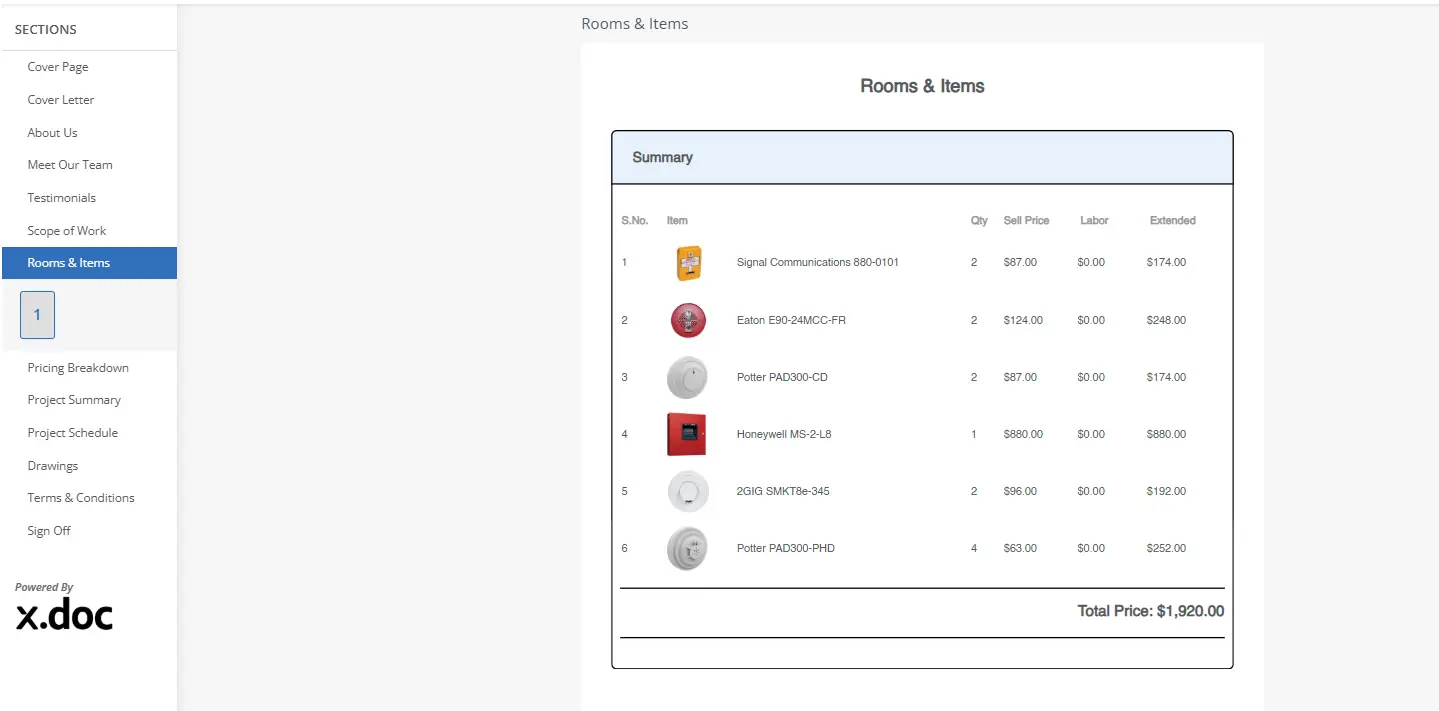
Equipment cost changes due to manufacturer updates, distributor pricing changes and some additional discounts. Fire protection estimating software helps teams maintain more organized pricing, so estimators can create reliable quotations based on cost structures and project requirements.
Improve Visibility into Equipment and Installation Costs
A reliable estimate includes more than equipment pricing. Factors such as labor, cabling, programming, testing and commissioning can all affect installation costs. With the right estimating software, all these factors can be combined together, supporting better fire protection estimating decisions.
Improve Collaboration Across Teams
Sales, estimating and procurement teams need access to accurate project data. When connected with fire alarm system design software, estimating becomes more efficient by keeping design details, equipment lists and cost information aligned. This helps teams identify pricing gaps earlier, improve estimate accuracy and create more reliable budgets before submitting bids.
How Can x.doc Help with Fire Alarm Cost Estimation?
Creating an accurate fire alarm system cost estimation is just one part of winning a project. Once quantities, requirements and installation scope are calculated, sales managers need to convert estimates into a clear and professional proposal.
Managing this process using spreadsheets, outdated templates and separate e-signature tools can lead to pricing inconsistencies, missing scope details, outdated proposal versions and delays in client approvals.
XTEN-AV’s x.doc helps fire alarm contractors turn detailed cost estimates into approved proposals. This can be done by bringing cost calculations, scope details, proposal creation, digital signature and proposal tracking into one platform. This helps sales teams respond faster and create accurate quotes.
Turn Complex Fire Alarm Estimates Into Client Ready Proposals
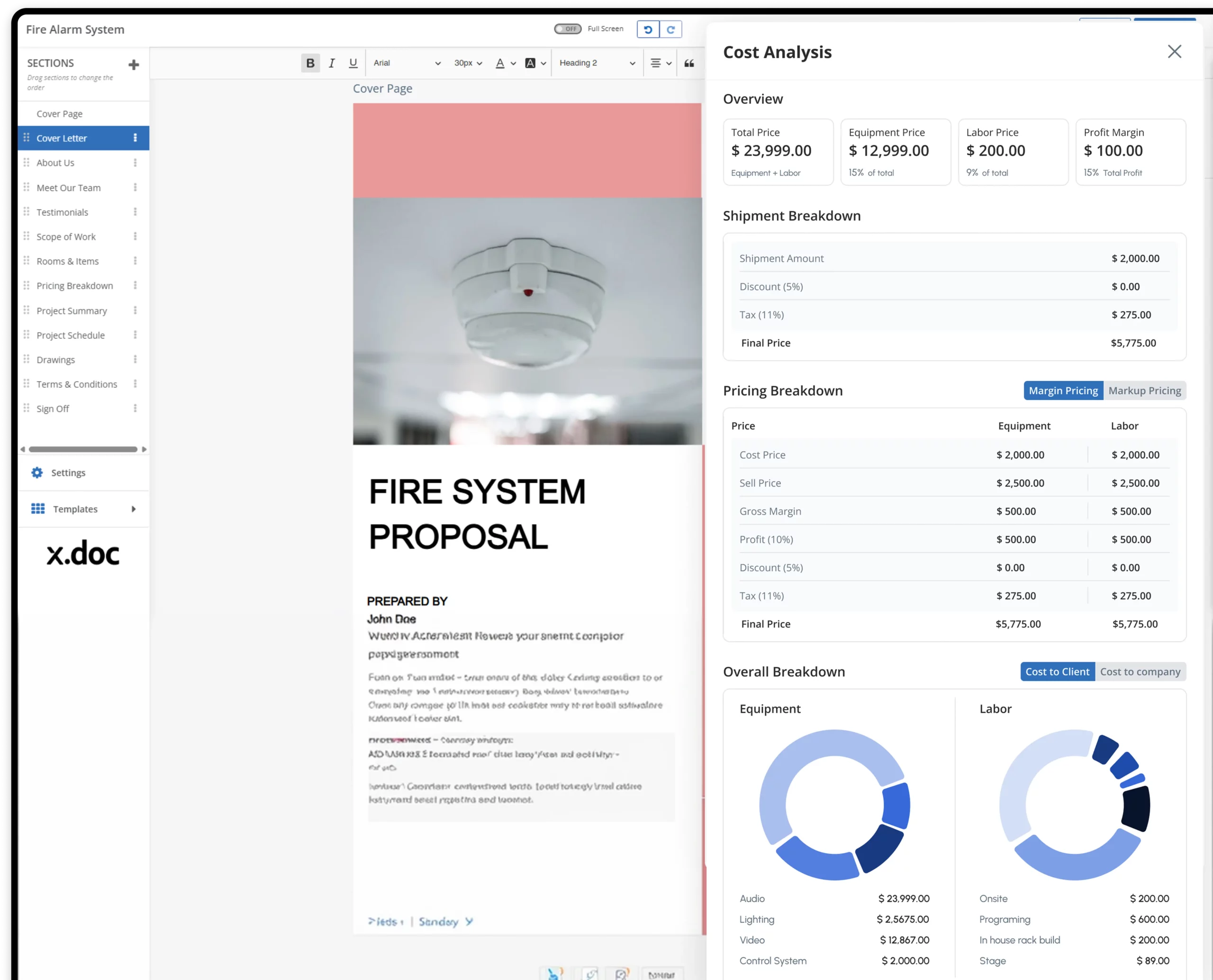
Fire alarm projects often include multiple components, installation services and maintenance requirements. x.doc helps AV professionals organize project information into well-organized proposals. With professional templates and customizable formats, fire alarm contractors can create consistent, detailed proposals without rebuilding documents for every opportunity.
Keep Sales and Installation Teams Aligned
The project often requires coordination between sales managers, estimators, engineers and procurement teams. When information is spread across different tools, teams may work with different or outdated versions of pricing, equipment lists or project needs. x.doc centralizes project scopes, pricing sheets and client requirements into a single unified record, eliminating communication silos and ensures sales people and installers use the same data.
Maintain Control Over Equipment, Labor and Project Costs
A small mistake in a fire alarm estimate has a huge impact on project profitability. x.doc creates proposals with organized cost details, including equipment, labor, discounts and other project related costs. When these details are checked during the quoting process, cost visibility can be improved. This helps in making more informed decisions before submitting an estimate.
Know When Customers Engage With Your Proposal
Sending a fire alarm proposal is only the beginning of the sales process. Without visibility into customer engagement, sales teams often have to guess when to follow up or whether a proposal has been reviewed. x.doc provides trackable proposal URLs that show when customers access proposals. This allows sales teams to follow up at the right time and have better visibility into active opportunities.
Audio Visual System Design Mastery + Winning Proposals = 10x Productivity!
- ✔ Automatic Cable Labeling & Styling
- ✔ 100+ Free Proposal Templates
- ✔ Upload & Create Floor Plans
- ✔ 1.5M+ Products from 5200 Brands
- ✔ AI-powered 'Search Sense'
- ✔ Legally Binding Digital Signatures
Conclusion
A successful fire alarm project starts with a reliable estimate, which is not just about calculating equipment quantities or applying a standard cost-per-square-foot formula. Every project includes different requirements based on building type, system design, quantities, installation complexity, labor requirements and other factors that should be considered to avoid inaccurate bids, margin erosion and costly changes.
Once the right estimate is prepared, presenting it to the client is equally important. XTEN-AV’s x.doc helps fire alarm estimators transform detailed estimates into professional fire alarm proposals by organizing scope details, cost information, proposal documents, customer tracking, and digital approvals in one platform. Sales managers can respond faster, minimize proposal inconsistencies and create a streamlined process from estimation to project approval.
FAQ’s
Costs vary based on building size, system type, device count, and installation requirements. A reliable estimate should be based on the actual project scope rather than estimating by square foot/meter.
Monitoring fees are generally an ongoing expense and may not be included in the initial system installation estimate.
Labor depends on system complexity, device count, cable routing, accessibility, programming, testing, and commissioning requirements.
Addressable fire alarm systems usually have higher upfront equipment costs, but conventional systems often require more expensive and complex wiring. However, the total cost difference depends on system size, device requirements, installation complexity and project scope.

Explore more by topic
Related Blogs
-

- Posted by Sahil Dhingra

Audio Visual Courtroom Audio Visual (AV) Systems: A Complete Guide for Courts...

-
- Posted by Sahil Dhingra
Audio Visual 10 Best draw.io Alternatives for AV Professionals Sahil Dhingra Published...

-
- Posted by Sahil Dhingra
Audio Visual 7 Best Schematic Drawing Software for AV System Integrators Sahil...