








5 Reasons AV Integrators Are Moving From Spreadsheets to BOM Procurement Automation

Sahil Dhingra
Published 1 OCT 2026
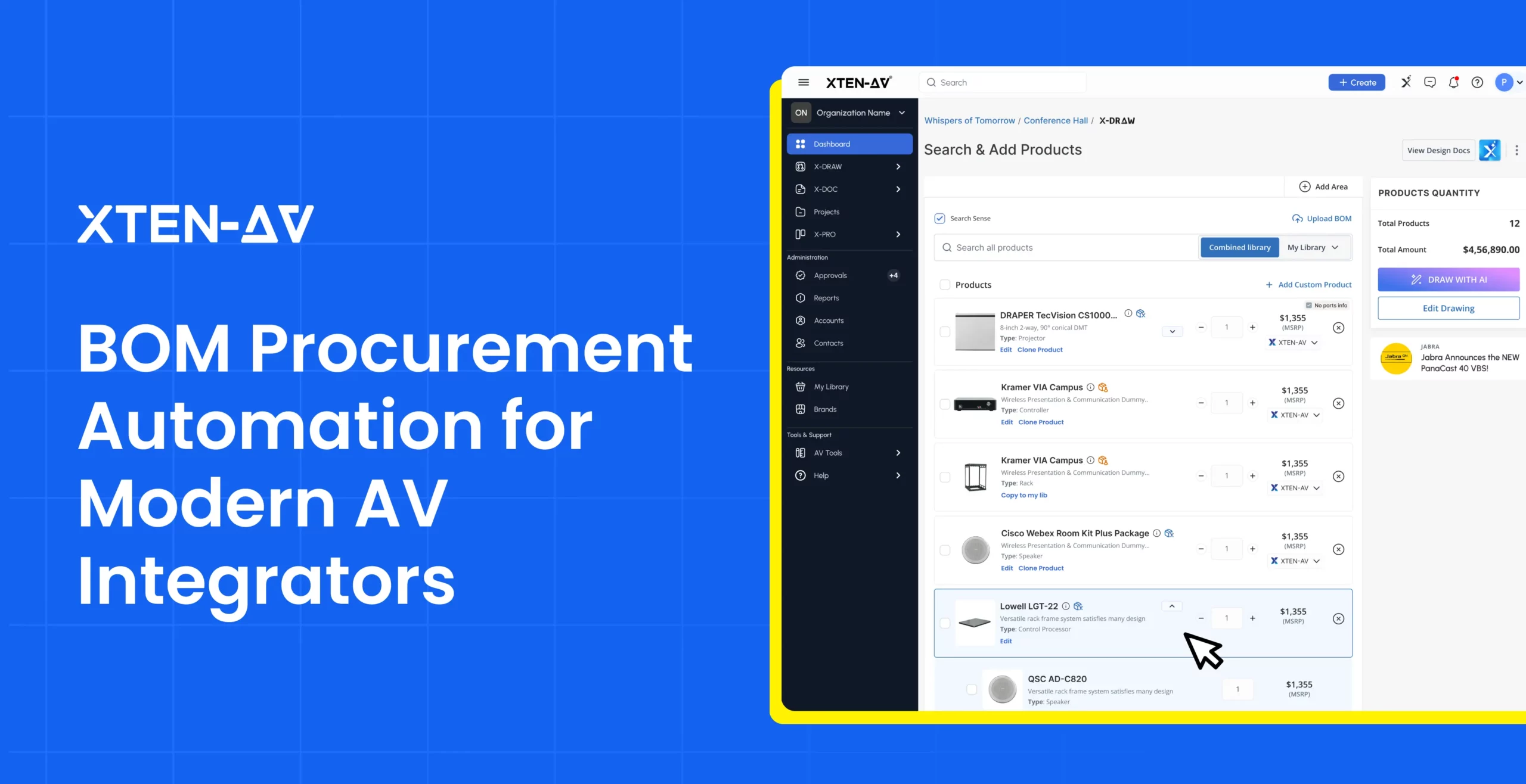
Commercial AV projects can involve hundreds of devices, accessories, cables, mounts and other components sourced across multiple manufacturers and vendors. It is also important to manage dealer pricing, vendor information and purchasing requirements throughout the project.
As system designs change, AV designers and estimators must keep equipment quantities, model numbers, dealer pricing, vendor information and purchasing requirements aligned with the latest BOM. Managing these details through scattered spreadsheets and separate PO management software can become difficult, creating more manual updates, version-control issues and gaps between design and procurement data. Without a structured approach, large-scale audio visual deployments often deal with budget overruns, component incompatibility and timeline delays.
The financial impact of poor project information can be significant. As per NSCA, more than 55% of systems integration projects finish late or over budget due to inaccurate estimates and challenges in project management or execution. Accurate equipment, pricing and purchasing data becomes increasingly crucial as AV projects move from design into delivery.
This is why more AV integrators are turning to BOM procurement automation. Instead of manually updating equipment lists, checking dealer pricing, creating purchase orders and tracking vendor information across separate files, integrators can automate many of these repetitive order management.
This blog explains how BOM procurement automation helps AV integrators connect equipment data, pricing, vendors, purchase orders and inventory while moving from spreadsheet-based procurement to a more structured approach.
Key Takeaways
- BOM procurement automation keeps AV equipment, quantities, pricing, vendor data and purchasing information synchronized from design through ordering.
- Spreadsheet-based BOM management becomes harder to control as AV projects involve more equipment, vendors, revisions, purchase orders as well as stakeholders.
- NSCA reports that more than 55% of systems integration projects finish late or over budget because of incorrect estimates and poor project management or execution.
- Modern BOM management software should support automated BOM creation, centralized product data, purchase order management, pricing, inventory visibility and AI-assisted recommendations.
- XTEN-AV brings AV design, BOM creation, dealer pricing, purchasing, inventory and project information into a connected platform for AV projects.
What Is BOM Procurement Automation?
BOM (Bill of Materials) procurement automation is a software-driven process that synchronizes and manages equipment data from AV designs to connect BOM information with purchasing activities. Instead of manually transferring product details, quantities, pricing and vendor information from an AV BOM into separate procurement files, AV integrators can keep this data connected as the project moves from design to purchasing.
An AV BOM may include displays, speakers, amplifiers, control processors, cables, mounts, network devices and hundreds of other components sourced from multiple manufacturers and vendors. As design changes, procurement teams need to keep product quantities, pricing, availability and purchasing information aligned with the latest project needs. BOM management tools help centralize this information and allow teams to move from an approved equipment list to purchasing without rebuilding the same data across multiple spreadsheets. Managing these details manually across multiple spreadsheets can make procurement harder to control.
5 Reasons AV Integrators Are Moving From Spreadsheets to BOM Procurement Automation
Spreadsheets are excellent for small-scale operations, they quickly become difficult to manage when handling complex AV deployments involving hundreds of items, multi-vendor procurement and real-time installation tracking.
Therefore, AV integration firms use Bill of Materials (BOM) management software to replace scattered spreadsheets and manual data entry with a centralized, structured database to keep equipment and purchasing data more organized.
These five areas show where spreadsheet-based procurement creates the most friction as AV projects become larger and more complex:
Manual BOM Creation Creates Errors and Wastes Engineering Time
Manual BOM creation results in data-entry errors and requires AV engineers to spend more time maintaining project data.
Building an AV BOM manually requires AV engineers to enter product names, model numbers, quantities, accessories and pricing into spreadsheets. When working on bigger projects, even a small change in the system design can require several updates across the equipment list.
However, manual updates increase the chance of duplicate entries, incorrect quantities, missing products or outdated specifications while taking time away from system design and technical validation.
Outdated Pricing and Vendor Data Makes Procurement Difficult
Outdated pricing and vendor data can lead to inaccurate estimates, margin loss and purchasing delays in AV projects.
AV equipment pricing can vary by distributor, dealer agreement and project requirements. When pricing is stored in multiple disconnected sources, it creates significant bottlenecks, risk of data entry errors and missed margins. Procurement teams often need to manually verify prices across vendor portals, emails and standalone spreadsheets before placing an order.
Using outdated cost or supplier information mentioned in the spreadsheet data directly affects project profitability, leading to eroded margins, unexpected budget overruns and delayed order cycles. Transitioning to modern BOM management tools can keep all the crucial data organized in one place, making it easier to work with the latest procurement data.
Manual BOM-to-Purchase Order Processes Create Procurement Challenges
Manual BOM-to-purchase order processes require repeated data transfers, increasing the risk of purchasing errors and version mismatches.
An approved BOM is only the starting point for procurement, translating it into physical inventory needs a highly coordinated procurement execution process. Purchasing teams still need to separate products by vendor, verify quantities, identify suppliers and prepare purchase orders. When this process relies on spreadsheets, data often has to be copied from an engineering BOM into another file or separate PO management software. This wastes hours and introduces critical errors between the approved equipment list and the final purchase order.
BOM procurement automation removes the friction between design and execution by creating a more direct connection between equipment data and purchasing activities, helping AV companies move from approved BOMs to purchase orders with fewer manual data transfers and handoffs.
Spreadsheet-Based Procurement Does Not Scale for Enterprise AV Projects
Spreadsheet-based procurement becomes difficult to control as enterprise AV projects expand across multiple rooms, buildings, campuses and locations.
Enterprise AV procurement involves multiple rooms, buildings, campuses or locations. When procurement processes rely on shared spreadsheets, managing this level of scale while multiple users are constantly overwriting data inevitably triggers a costly chain reaction of errors.
Teams may create multiple versions, apply different updates, or work with information that is no longer current. Procurement managers also have limited visibility into what has been approved, ordered, received, or still requires action. BOM software for procurement provides a more structured approach for managing larger equipment lists and purchasing activities across multiple projects.
AI Is Changing How AV Integrators Manage BOM Creation and Procurement
AI helps AV integrators streamline BOM creation faster by extracting design data, calculating exact quantities and suggesting compatible equipment from an extensive database.
For projects involving large product databases, AI can help integrators interpret project requirements and narrow down relevant equipment options. When combined with BOM procurement automation, it can support a faster transition from equipment planning to purchasing while maintaining more consistent project data. For AV integrators, the value of AI is not simply faster BOM generation. It is the ability to spend less time on data entry and more time validating equipment choices, pricing and procurement requirements.
BOM Procurement Automation vs Spreadsheet-Based Procurement
Spreadsheet-based procurement relies heavily on manual entry, file updates and separate checks for product, pricing, vendor and purchasing information. This means procurement teams spend more time validating information than making strategic sourcing decisions.
Whereas, BOM procurement automation gives AV designers, project managers, procurement teams and enterprise AV/IT departments greater visibility into equipment, pricing and purchasing activity as projects move from planning to procurement.
| Area | Spreadsheet-Based Procurement | BOM Procurement Automation |
| BOM Management | Product quantities, details and revisions are updated manually. | BOM management software keeps equipment data organized and ensures that changes to a single component automatically update across all related engineering views and procurement lists. |
| Pricing | Procurement teams need to check price lists, emails or even distributors separately. | Integrating supported pricing and dealer price data directly into your Bill of Materials (BOM) management system helps them work with current cost data and limit relying on separate price lists and manual price checks. |
| Purchase Orders | There is a need to copy BOM data into disconnected files or a separate PO management software, which leads to duplicate parts, version mismatches and costly purchasing errors. | Supports purchase order creation and tracking. When purchase orders are directly linked to project product data, project managers can have real-time spend visibility and accurate budget tracking. |
| Inventory Visibility | Equipment details may be tracked in separate spreadsheets. | Real-time AV equipment inventory management helps track equipment availability and identify potential shortages earlier. |
| Collaboration | Multiple files and versions can make it difficult to identify the latest information. | Centralized project data provides a unified, real-time view of equipment and procurement details, helping reduce version confusion and giving integrators a shared view of equipment and procurement information. |
Ready to move beyond spreadsheet-based BOM management?
What Features Should AV Integrators Look for in BOM Management Software?
The right BOM management software can be referred to as a single source of truth, bridging the gap between an AV engineer’s technical design and a spreadsheet. When evaluating software to manage BOM, look for features tailored to the specific needs of AV designers, project managers and buyers.
The following features are capable for handling AV projects with greater accuracy, visibility and control:
Automated BOM Creation and Management
Look for software that can generate an AV BOM directly from design or product data, including a complete equipment list with quantities, part numbers and pricing. The BOM should be updated instantly when equipment selection or project requirements change. This limits manual data entry and helps keep equipment information aligned with the latest system design.
Centralized Product and Vendor Data
AV projects usually include products from several manufacturers and suppliers. BOM management tools should provide a centralized product library while also allowing AV professionals to maintain preferred or custom equipment information.
A centralized data platform acts as a single source of truth and makes it easier for AV designers and engineers to find product specifications, pricing and equipment details without dealing with multiple scattered files.
Purchase Order Creation and Tracking
Look for BOM management software that can carry approved equipment data into the purchasing process. The system should help procurement teams create purchase orders, maintain vendor & product details and track purchasing information without manually transferring data between BOMs, spreadsheets and disconnected procurement tools.
Purchase order capabilities can limit dependence on spreadsheets or separate purchase order management software while giving project teams greater visibility into purchasing activity. This gives project managers clearer visibility into purchase order status and purchasing activity.
AI-Powered BOM Automation
Building a BOM manually means searching through thousands of manufacturer SKUs, cross-checking compatibility and re-pricing every time a client changes the scope. AI BOM automation can simplify this process by turning project requirements into structured equipment recommendations. It can assist with product selection, quantities, pricing and Bill of Materials creation.
Look for AI capabilities that can interpret project requirements through chat or voice commands, recommend relevant equipment and generate a project-specific BOM with quantities and pricing. As project requirements change, AI-assisted BOM tools can also help update equipment recommendations and related BOM data, minimizing manual adjustments.
How XTEN-AV Simplifies BOM Procurement Automation for Enterprise AV Projects?
XTEN-AV unifies AV design, estimating, procurement and execution within one cloud-based platform. The following capabilities show how BOM creation, dealer pricing, purchase orders and inventory are handled across AV projects:
Streamlining BOM Management for Large and Complex AV Projects
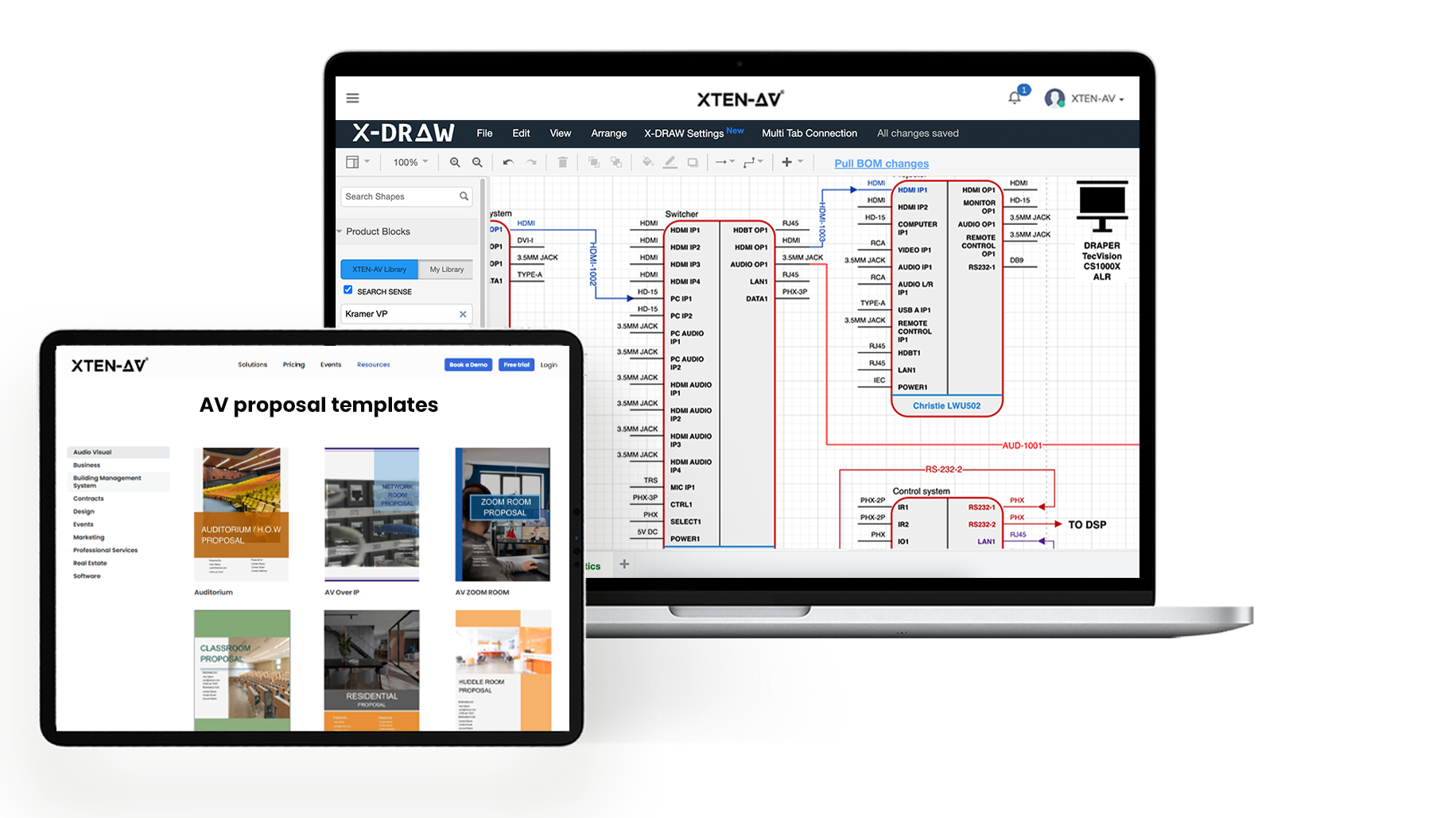
X-DRAW can generate an AV BOM directly from system design data, helping pre-sales teams generate complete equipment lists with all crucial information related to AV components. XAVIA by XTEN-AV is the AV industry’s first AI Agent that can assist with BOM recommendations using a database of more than 1.5 million products. It can generate equipment recommendations with quantities and pricing based on the needs of a project. Together these capabilities help prepare and manage BOM information without creating every equipment list manually from scratch.

Connecting BOM Management With Procurement
XTEN-AV brings pricing directly into the BOM through supported distributor integrations. AV professionals can upload negotiated dealer pricing via .XLS or .CSV. While, integrations with distributors such as ADI and Snap One provide access to real-time dealer pricing directly within BOMs and proposals. This gives estimating teams clear cost information before equipment is purchased and eliminates the need to check pricing across separate files and distributor portals. For enterprise AV procurement, keeping equipment and pricing data together also makes it easier to maintain consistent information across projects.
Simplifying Purchase Order Management
X-PRO Install, which is a cloud-based AV project management platform, brings equipment inventory, purchase orders and invoicing features into the same AV project management environment that helps in creating and sending purchase orders directly within the platform. Project managers can also track purchase order progress across different stages, including draft, ordered, partially received and delivered, giving better visibility into purchasing activities. In addition, one of the Accounting & Finance integrations like QuickBooks Online with XTEN-AV helps in creating purchase orders directly from x.doc and X-PRO platforms. This connected approach keeps purchasing data connected with the wider project.

Improving Visibility Across Enterprise AV Procurement
XTEN-AV connects design data, Bill of Materials, pricing and inventory into a single cloud ecosystem to streamline enterprise AV procurement. With X-DRAW, a cloud-based drawing and diagramming platform that lets AV professionals carry system design information, including equipment selections and design data, into the BOM, helping maintain consistency between technical planning and procurement requirements.
Centralized cloud data plays a significant role in keeping AV procurement information consistent across design, sales and project teams. With BOM and pricing data connected to project information, better visibility can be attained into the equipment, cost, inventory and purchasing activity. This also helps sales, engineering and procurement teams work with more consistent project information and supports better collaboration throughout the project.
Conclusion
Spreadsheet-based BOM management becomes harder to manage as AV projects involve more products, pricing updates, vendors, purchase orders and project stakeholders. BOM procurement automation connects AV design data with pricing, vendor information, inventory and purchasing, keeping product data aligned as projects move from design to procurement.
With capabilities for automated BOM creation, dealer pricing, purchase order management, inventory tracking and AI-assisted equipment recommendations, XTEN-AV helps AV professionals manage procurement data within one connected platform. Want to move from manual BOM updates to a more connected procurement process? Start your free trial with XTEN-AV and explore a more efficient approach to AV procurement.
Audio Visual System Design Mastery + Winning Proposals = 10x Productivity!
- ✔ Automatic Cable Labeling & Styling
- ✔ 100+ Free Proposal Templates
- ✔ Upload & Create Floor Plans
- ✔ 1.5M+ Products from 5200 Brands
- ✔ AI-powered 'Search Sense'
- ✔ Legally Binding Digital Signatures
FAQs
BOM procurement automation uses connected software to synchronize and manage Bill of Materials data with purchasing activities, helping teams streamline sourcing, ordering and procurement tracking.
It minimizes manual data entry and helps keep BOM, pricing, purchasing and project information more consistent than separate spreadsheet files.
BOM management software helps AV professionals create, update, organize and track product, quantity, pricing, vendor and procurement information.
AI BOM automation can generate equipment recommendations with quantities and pricing from project requirements entered through voice or chat commands.

Explore more by topic
Related Blogs

-

- Posted by Sahil Dhingra

Audio Visual 7 Best Floor Plan Software for AV System Integrators Sahil...
-
- Posted by Sahil Dhingra
Audio Visual AV Cables Guide: Types, Connectors, Uses and Wiring Diagrams for...
-
- Posted by Sahil Dhingra
Audio Visual Courtroom Audio Visual (AV) Systems: A Complete Guide for Courts...