




Office Ceiling Speaker System Layout for Even Speech and Music Coverage

Office Ceiling Speaker System Layout

Author Image

Sahil Dhingra

Published 08 June 2026
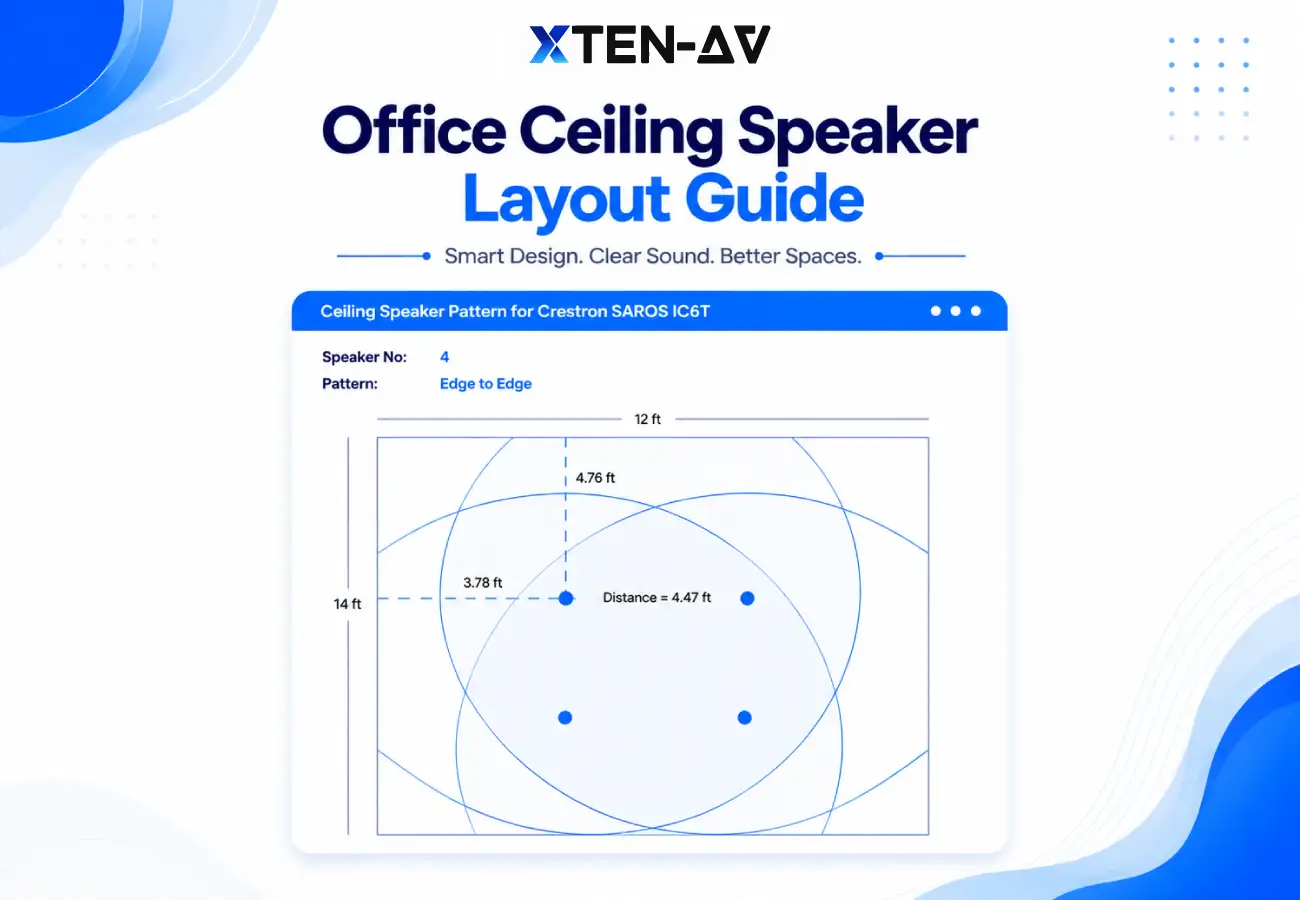
Office Ceiling Speaker System Layout for Even Speech and Music Coverage
Table Of Content

Office ceiling speaker layout is the process of placing speakers across work areas, corridors, and shared zones so announcements and background audio remain clear and even.

There’s something incredibly fascinating about walking into a room alone feeling how effortlessly sound fills the room. That’s the charm of the office ceiling speaker system. However, designing a good ceiling speaker layout in office space not only includes spacing out devices, but it also includes delivering consistent and clear sound, covering open office areas, shared areas, reception areas and corridors. The commercial sound system layout needs to ensure seamless communication without overwhelming background audio, while also avoiding any kind of dead spot or uneven sound level. AV designers should consider factors like office floor area, ceiling height, speaker spacing and zone boundaries. One of the tools like office speaker layout calculator can further help in instantly estimating spacing and coverage across different office areas. 

In this blog, you’ll learn how to design effective office ceiling speaker layouts that can improve speech coverage across different office zones, avoid uneven audio distribution, and streamline AV workflows for faster project documentation with XTEN-AV

Key Takeaways

  1. Different office areas such as reception zones, shared spaces, and corridors require different speaker placement strategies and so, a one-size-fits-all approach doesn’t work.
  2. Office ceiling speaker system design should focus on several office specific requirements such as paging, announcements, emergency messaging and background audio.
  3. Ceiling height and room variables such as floor area, ceiling type and zoning directly impacts sound dispersion and influences speaker spacing and overall speech clarity.
  4. 70V ceiling speaker systems are ideal for offices with multiple zones, long cable runs, and large-scale distributed sound requirements.
  5. AV-specific design platform, X-DRAW, helps simplify office audio system planning through automated layouts, line schematics, cable schedules and documentation generation.
  6. Intelligent design workflows improve installation accuracy, reduce manual errors and ensure more predictable audio performance across office environments.

The all-in-one solution for your Audio Visual (AV) Project Design & Documentation needs

Transform your audio-visual experience with XTEN-AV.

No Credit Card required

What Is an Office Ceiling Speaker Layout?

An office ceiling speaker layout is the planned arrangement and zoning of ceiling-mounted speakers with the motive to improve speech coverage and distribute audio evenly across different areas of a workplace. It should be designed with the purpose around how sound is actually used in office environments where zones like open workspaces, shared spaces and corridors serve different communication purposes.

In office, the primary use case is clear and reliable communication, including announcements and emergency messages so they are intelligible across all spaces and at the same time providing low-level background audio especially in open office space. However, the needs are not identical, announcements high clarity and reach, while background audio should remain subtle. So, systems are zoned to handle them separately. To support these use cases, designers should define zone boundaries, adjust speaker spacing as per the ceiling height and office floor area, and ensure there are no dead spots in critical areas like corridors or reception. As a result, the layout will align audio performance with everyday office communication needs instead of treating every space the same.

Which Office Areas Need Different Speaker Placement?

It is crucial to understand that different areas within an office need different speaker placement in order to balance sound distribution, speech intelligibility and acoustic privacy.

Shared Workspaces: Ceiling mounted speakers are considered the best choice for distributing sound evenly while avoiding hotspots. Speakers should be placed at regular gaps to maintain uniform sound coverage across large, open spaces.

Reception: It is known as a high traffic area where balance of background music and clear paging capabilities are required. Discreet ceiling speakers are often placed to provide low volume background music with the motive to create a soft-sound environment.  

Corridors: Hallways or corridors are transition zones where ceiling speakers should be mounted along the centerline of the hallway for crystal clear and consistent audio coverage. With this placement, the sound can be evenly distributed evenly in both directions and reduces volume drop-offs along the corridor.

Open Office: In large open-office environments with closely arranged workstations, the motive is to acquire streamlined, even audio coverage while eliminating noticeable dead zones. Install evenly spaced in-ceiling speakers for standard ceiling heights to maintain consistent sound distribution.

How Do Paging and Background Music Change Office Layout?

Paging and background music change an office ceiling speaker system because they serve different purposes in an office audio system design.

How Paging and Background Music Changes Office Layout

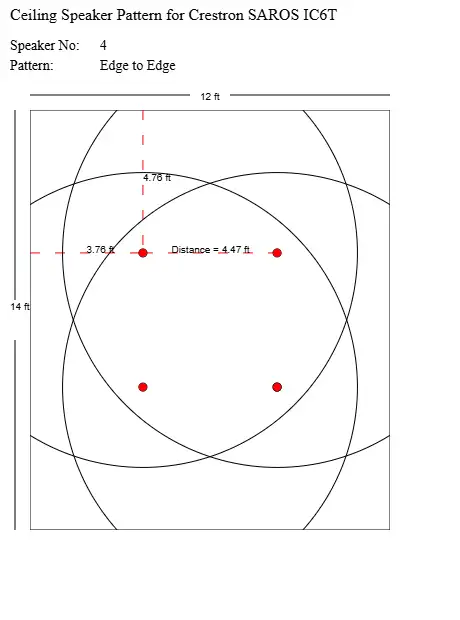
Paging systems are designed to effectively support announcements and improve speech coverage. With the motive to ensure clear communication, speakers need to be placed with tighter spacing in corridors, shared spaces and reception areas. As a result, you don’t have to deal with dead zones and announcements will be properly heard across office zones.

However, the ceiling speaker coverage layout should be more structured because there is a need to support consistent intelligibility across the complete space. On the other hand, the purpose of the background music systems is to distribute audio evenly for comfort, but not speech clarity. Talking about open office space, ceiling speakers for office use are spaced more evenly in order to maintain streamlined background audio.

How Does Ceiling Height Impact Office Speaker Spacing?

Talking about low ceiling offices, the sound from ceiling speakers reaches listeners directly, hence ceiling speakers for office spaces can be installed closer together to ensure even coverage. While, in higher ceiling environments, sound needs to travel farther before reaching people and as a result, it makes the speech hard to understand especially if the speakers are spaced too far apart. Hence, speakers should be placed strategically. Sometimes it can be installed at higher density in critical zones and should be adjusted to maintain consistent speech coverage and audibility.

Office audio system design is not just based on office floor area, room variables also affect layout decisions and ceiling height is just one of the room variables that changes how an audio system performs.

Several other variables such as zone boundaries, office floor area, ceiling type and announcement needs also affect the way sound behaves in a space. These room variables change sound coverage and as a result, they also change the speaker layout, including:

For example, open office areas may use wider speaker distribution for comfortable background audio, while high-end boardrooms may use fully enclosed back-can speakers for focused sound quality.

How Can AV System Integrators or Designers Avoid Uneven Coverage in Offices?

Uneven coverage in offices can occur because of ignoring dead spots, overconcentration, ignoring corridors and zone transitions. When it comes to improving speech coverage and distributing audio evenly, AV teams need to be careful while planning office audio system design. They should pay attention to several crucial factors in which some of them are listed below:

Plan Speaker Layout by Office Zone: Planning commercial ceiling speaker layout by considering zone is of utmost importance. Open office areas, reception areas, shared space and corridors need different coverage strategies which should not be overlooked.

Adjust Speaker Spacing for Ceiling Height: Ceiling height is one of the factors that directly changes speaker spacing expectations in office environments. When there is incorrect spacing then this can create dead spots or overconcentration of sound and as result, this will minimize speech intelligibility and background audio coverage.

Do Not Ignore Corridors and Transition Areas: Corridors and circulation paths often require tighter speakers to support announcements clearly. And, smooth transitions between zones plays an indispensable role in maintaining proper coverage throughout the workspace.

Use Zoning for Better Coverage Control: A well performing distributed office audio depends on several factors such as when audio is zoned by department, announcement needs and workspace type. With proper zoning, you can avoid dead spots and improve speech coverage to name a few.

Last but not the least, when following structured ceiling speaker wiring guide, you can ensure consistency during installation and simply eradicate wiring mismatches across office zones.

When Should Offices Use 70V Ceiling Speakers?

70V ceiling speakers are considered the best choice when an office audio system needs to cover large areas with multiple ceiling speakers, long cable runs or flexible zoning across several work areas. It becomes a more practical option when an office:

  • Requires distributed office audio across different rooms or to create a perfect meeting room AV design
  • Needs office paging speakers for clear announcements or any kind of emergency messaging
  • Wants separate audio zones with independent control
  •  Includes multi-zone or multi-floor office environments
  • Amalgamates music and speech reinforcement within the same infrastructure

Furthermore, a well-designed 70V ceiling speaker layout allows office spaces to avoid dead zones, support clear announcements and maintain uniform audio coverage across different spaces.

How Does XTEN-AV Help Plan Office Ceiling Speaker Layouts?

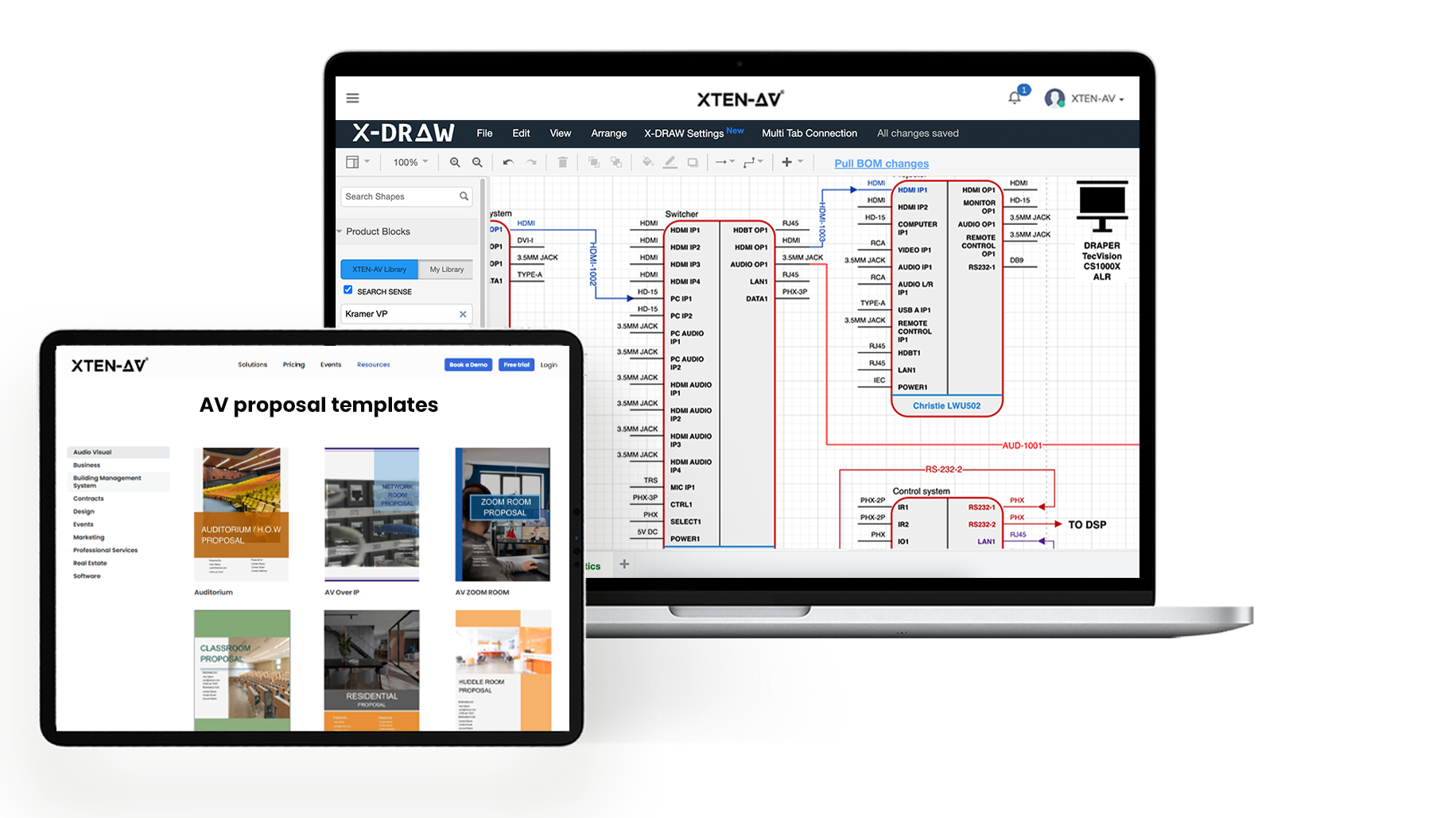
XTEN-AV streamlines office ceiling speaker system planning for AV integrators by simplifying two crucial stages of the workflow: Selecting the right ceiling speaker system in the BOM and proposal and automatically generating the ceiling speaker layout once the BOM is finalized.

Typically, AV integrators can finalize speaker selection within X-Draw or use XAVIA AI Agent for Audio visual with voice or text command to create the BOM. After locking the speaker products, finalized configuration can be used instantly to build the speaker layout. For office AV projects installation, the audio visual (av) system design and integration platform helps remove manual coordination between BOM planning, proposals and layout creation. Instead of choosing ceiling speakers in one workflow and manual redrawing layouts separately, teams can maintain continuity throughout the project. This creates a more efficient and organized way to prepare ceiling speaker positioning and project deliverables while improving overall consistency.

The all-in-one solution for your AV needs

Transform your audio-visual experience with XTEN-AV.

No Credit Card required

Audio Visual System Design Mastery + Winning Proposals = 10x Productivity!

  • Automatic Cable Labeling & Styling
  • 100+ Free Proposal Templates
  • Upload & Create Floor Plans
  • 1.5M Products from 5200 Brands
  • AI-powered ‘Search Sense'
  • Legally Binding Digital Signatures

Laptop Mockup

Conclusion

Designing commercial ceiling speaker layout is usually where AV projects show their real-world complexity. Incorrect spacing, missed zoning logic or poor consideration of ceiling height can give rise to problems like uneven coverage, unclear paging and dead zones. These issues occur because of manual planning gaps, inconsistent zoning decisions and a lack of unified workflow between design and execution. Instead of relying on disconnected tools and manual drawings, platforms like X-Draw gives AV professionals an AV specific design environment with access to a 1.5M + product library, AV design templates, floor plan upload and creation to name a few, designers can move from concept to validated layout faster. Features like automatic ceiling speaker layouts, line schematics, cable schedules, and BOM generation ensure that design is accurately translated for installation without manual redrawing or interpretation errors. This not only improves efficiency but also enhances consistency across projects.

Turn office ceiling speaker system planning into a faster, smarter workflow with automated layouts, streamlined documentation and flawless AV design using XTEN-AV.

FAQ's

Yes, office ceiling speakers distribute audio evenly, improve speech coverage for announcements, and reduce clutter while supporting background music and paging across open office areas and shared spaces.

Speaker spacing simply depends on factors like ceiling height, office floor area, and coverage goals. Areas such as corridors, reception and open workspaces often require different spacing to avoid dead spots and uneven audio coverage.

Yes, 70V ceiling speakers are perfect for offices, particularly for large spaces, open floor plans or even multi-room paging systems because they simplify wiring and support flexible zoning.

The best layout for office paging and background music is a distributed ceiling speaker system which ensures uniform sound coverage, eliminating loud spots near speakers and preventing quiet areas.

Ceiling height affects both sound consistency and speech intelligibility. A higher ceiling paves the way for a wider coverage area, but simply reduces the sound pressure, whereas lower ceilings need tighter speaker spacing to maintain uniform audio coverage.

Explore more by topic

AV Design Mastery + Winning Proposals = 10x Productivity!

No Credit Card Required

Related Blogs
Projector Screen vs Wall_ Which Is Better for Image Quality
  • Sahil Dhingra
  • Posted by Sahil Dhingra
June 10, 2026

Audio Visual Projector Screen vs Wall: Which Is Better for Image Quality...

Office Ceiling Speaker System Layout for Even Speech and Music Coverage
  • Sahil Dhingra
  • Posted by Sahil Dhingra
June 8, 2026

Audio Visual Office Ceiling Speaker System Layout Sahil Dhingra Published 08 June...

70V Ceiling Speaker Layout for Commercial AV
  • Sahil Dhingra
  • Posted by Sahil Dhingra
June 7, 2026

Audio Visual 70V Ceiling Speaker Layout for Commercial AV Sahil Dhingra Published...

Sahil Dhingra
Sahil Dhingra
Sahil Dhingra is Co-Founder and CEO of XTEN-AV, a cloud-based Audio Visual (AV) system design & integration software for system design, proposals, project management, and post-installation service. With 10+ years of experience in software development, business analysis, and product leadership at companies including Apple, HP, and Cisco, Sahil leads XTEN-AV’s product vision for connected AV project lifecycle management. He focuses on building AI-assisted SaaS workflows that help AV teams reduce manual effort across system design, BOM creation, proposals, documentation, project delivery, reporting, and after-sales service.

This website stores cookies on your computer. Cookie Policy